
Of Search Engines and Logic Circuits
In their soaring following the release of Final Fantasy VII till the icarian fate of Final Fantasy: The Spirits Within, Squaresoft appeared a collective of dreamweavers. As long as an artist could imagine it, a Silicon Graphics workstation could render it, a few CD-ROMs could store it, and a Sony PlayStation could play it, anything appeared possible. One such dreamweaver, of the many left unsung in Square’s history in shadows cast by darling auteurs of Final Fantasy, was a young woman - Shōda Miwa. Joining Square in 1995, following work on Radical Dreamers, she moves on to SaGa Frontier where she contributes both to the broad worldbuilding and setting of the game but most importantly also acts as scenario director for one of its seven playable characters - Asellus, the Half-Mystic.
Since spinning-off from Final Fantasy, SaGa had honed itself to be its antithesis, and Frontier’s divergence from its cousin a few months older was perhaps the widest yet. Of course everyone knows, if not in experience but in its perpetually lingering cultural aftertaste, of the towering achievement of Final Fantasy VII as a cinematic, directed ludonarrative - a form and structure Frontier eschews for a Free Scenario system where player choice and ludic agency could render ultimate consequence. For our Half-Mystic, quickened by the devious Charm Lord Orlouge with his own blood, such consequences relate to conceptions of her gendered self and her relationships. Through sustained use or non-use of Mystic Equipment, Asellus can conclude her story as a Mystic, Half-Mystic or Human - with consequences for her relationships with Princess White Rose and the human seamstress Gina.
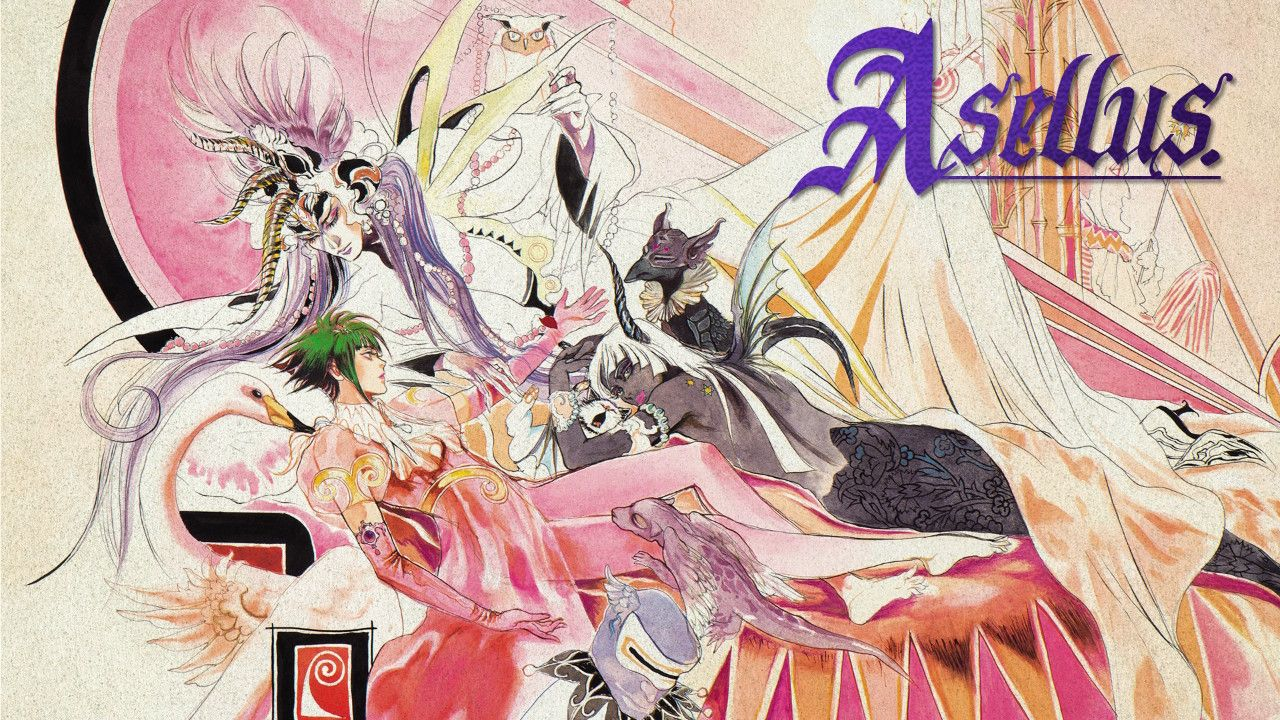
Series shepherd Kawazu Akitoshi has interpreted Asellus’s story as ‘not an LGBTQ+ one’, but has appreciated that reading. Shōda herself on the other hand has spoken contemporaneously of her intention to create a ‘strong female character who could live without men, and who other women would fall for’ and for her desire for players to ‘pay close attention to [her] interactions with White Rose, Gina and others.’ [1] Let us leave authorial intentions there. Owing to the fact that it is the literal male blood of Orlouge that transforms her, this mediation between the Mystic-Human can be quite facilely interpreted as a mediation between the masculine-feminine, which is reflected in the concluding state of Asellus’s relationship dynamics between her and, to use the language of the otome game, her ‘capture targets’. If this were purely a reading of SaGa Frontier, I would give more space here for the most prominent and active use of Mystic Equipment in gameplay being swords like the initial Faeblade and the disproportionately powerful Phantasm, tying expressions of Mystic-masculinity to direct phallic power, and how this facile association is subverted and decoupled later - but I simply want to establish that Shōda uses the ludological agency of the Role-Playing Game to formally structure both gender expression and romantic pursuit. Asellus, ‘the only Half-Mystic the world has ever seen’, is a lowercase non-binary character who holds within her a certain degree of expressive freedom, but importantly an expressive freedom influenced by ‘otome games, shojo manga, and the Takarazuka Revue.’
Shōda, as writer and setting designer, would once again explore a forbidden lesbian pseudo-romance between human and demon in Atelier developer Gust’s Nights of Azure, where the Knight Arnice and the Saint Lilysse rekindle their adolescent flame as a night of sacrificial ritual inches closer. Though I refer to it as a pseudo-romance, it is yuri par excellence, complete with confessions of love under moonlight and several nights of shared beds - enough to compound Shōda in my mind as a writer of queer gothic. Though not as free as SaGa Frontier, Nights of Azure too features multiple endings dependent on player choice and ludic achievement that affects Arnice and Lilysse’s ultimate fate. With this, we can establish that a Shōda Miwa romance is at least somewhat defined by choice and agency in player expression.
It might appear we are drifting further away from otome if we are discussing yuri instead, but a particular project bridges Shōda’s years at Squaresoft and her work with Gust. In the years following Final Fantasy XII, where she and Watanabe Daisuke picked up scenario responsibilities upon Matsuno Yasumi’s exit, she too would depart Square Enix and become a freelancer. In 2011, Gust and Otomate - Idea Factory’s otome game brand - would announce a ‘dream collaboration’, Atelier Elkrone: Dear for Otomate, with Shōda Miwa as head writer.
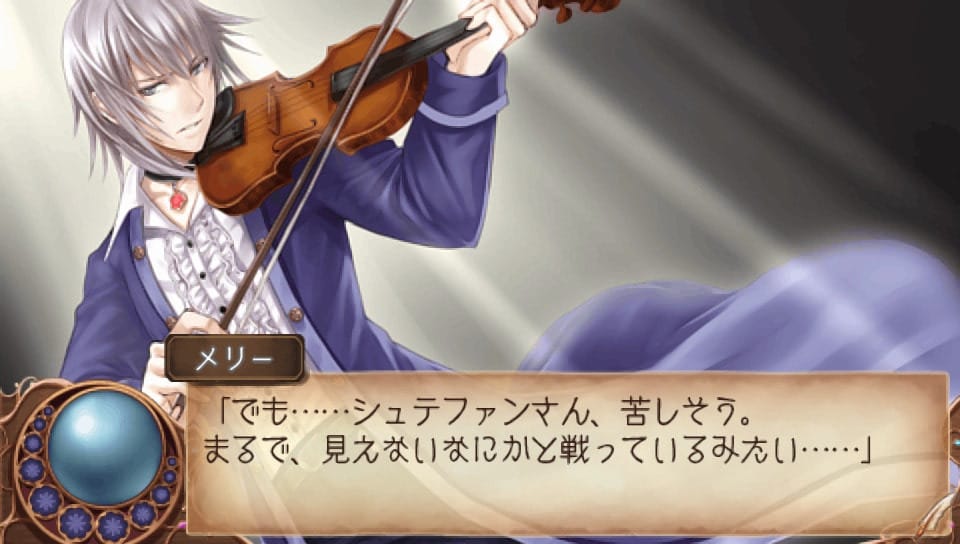
Atelier Elkrone’s formal qualities and production context is frankly a nexus of contradictions that allows us to see an otome game at perhaps its barest. Here we have a writer of romance with queer interests, an existing game series which, at the time, still held idiosyncratic ludic systems, and the most prolific, and hence perhaps most archetypal brand of otome games. What can an otome game be while also being an Atelier game and a Shōda Miwa romance? What must be sacrificed for the most sacrosanct elements of this mix to remain untouched? This is, I think, an imperfect intellectual exercise - it is an experiment assuming the subtraction of extraneous qualities in creating a fundamental otome game. I do not believe this reveals the grand truth about otome games as genre or form, but I think it still reveals a truth. Hence I believe in its validity as an experiment.
It is perhaps useful to define the basic formal structure of contemporary Atelier RPGs here too. Elkrone released between the end of the Arland series and the start of the Dusk series - games that feature young women as alchemist-explorer-protagonists who dungeoneer in pursuit of materials to synthesise objects and complete requests, under a time limit imposed by a calendar system. Optimal synthesis requires attention to material quality, traits, elements and such inheritables, which is facilitated by a search engine-like sort and filter system. Completing requests advances character relationships and various overarching plots. In a sense, Atelier has the basic form and structure of an otome game yet - it is only necessary to advance the prominence of (hetero-)romance. Elkrone inherits many of these features, but how it utilises them discards the ludic expressivity of the RPGs. And as established, ludic expressivity is the methodic language of romance in Shōda’s games. Are we then approaching a romance game with its romance curtailed?
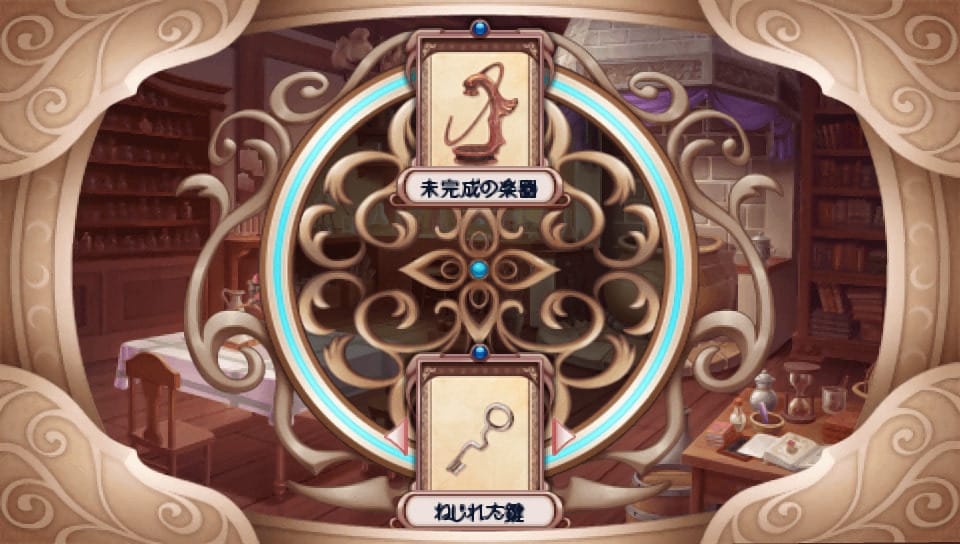
This structural curtailment is best expressed in Elkrone’s alchemy system where the main series games’ search-engine complexity is replaced by binary logic circuits. Protagonist Meriela has access to all required materials whenever synthesis is required, progress is simply a matter of choosing the correct item that would complete the circuit. From search-engine to logic gate circuit is an apt synecdoche for the curtailment of ludic, and thus intimate, expression within Elkrone from both Shoda and Atelier’s preceding works.
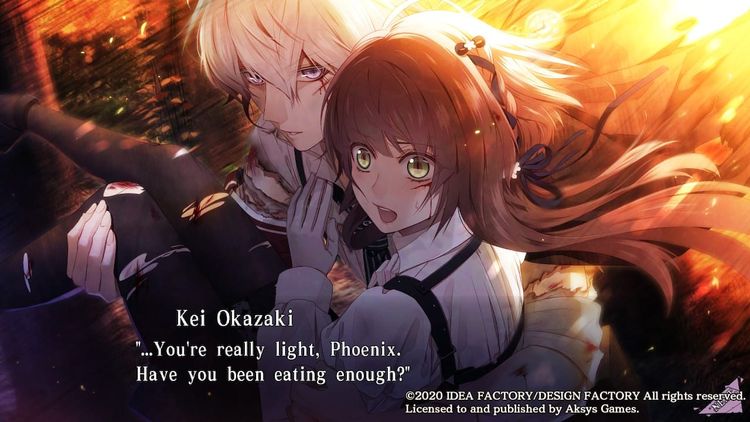
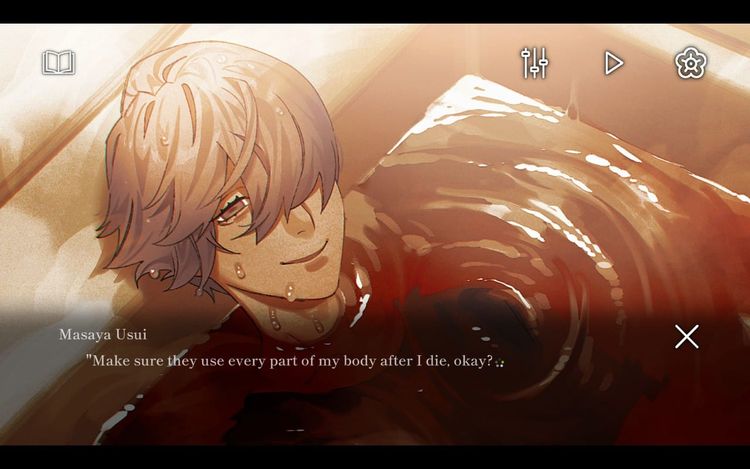
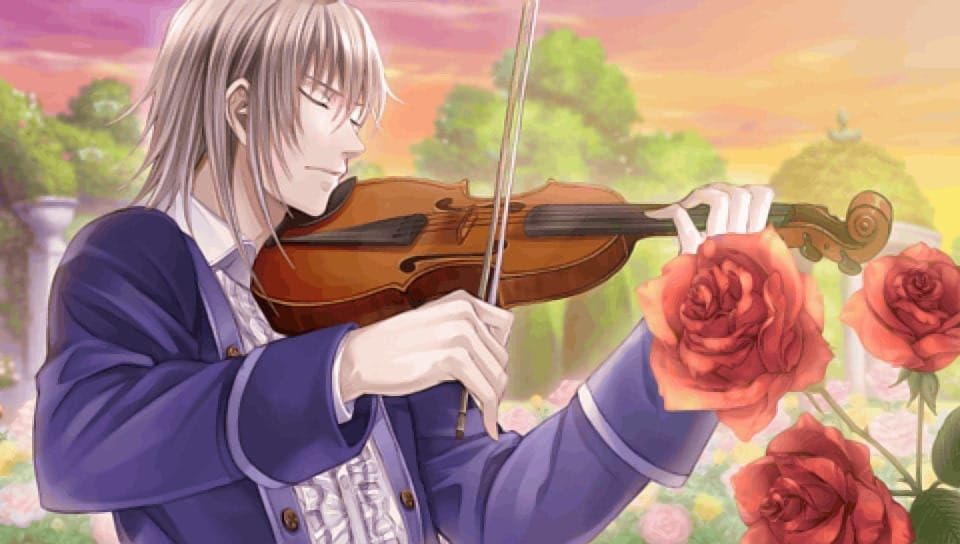
Of course, this curtailment is a natural result of retreating from systems-driven RPGs to linear visual novels that comes with the project’s nature, but perhaps the narrative can bridge this gap of formal intimacy. The basic narrative setup is thus: the alchemist Meriela follows in the footsteps of her grandmother - the singing alchemist Margaret - in opening an atelier in the city of Elkrone. The fairy Popote arrives with a request to synthesise a mysterious object with an unknown recipe. In Meriela’s pursuit to fulfill Popote’s request, she is enveloped in a grand conspiracy around singing alchemy while various male characters protect and assist her. The game’s capture targets are Meriela’s ex-classmate Ralf, the adventurer Johan, the knight Erhardt, the violinist Stephan, and amnesiac Alexey. Immediately, my sight is set on Stephan: churlish and rude, harbouring an intense hatred of alchemy, and the object of a different woman’s - the mayor’s daughter’s - fancy. If Elkrone can allow itself to be intimately expressive, I think, it would be in pursuit of him.
Referencing Asellus, Shōda speaks of how she ‘hate[s] it when female characters rely on men. Not only that, but such a simplistic characterization of femininity for women in games is beyond [her] suspension of belief.’ Though, the nature of the otome game as genre to some extent requires a portrayal of such reliance; it is part of how courtship and endearment are developed within the romantic fantasy of the genre. Unlike other Atelier protagonists, Meriela rarely even goes gathering alone without the protection of a male companion. To write for a genre specification is not necessarily a betrayal of values, but it is interesting to observe where generic structure and writerly instincts are most stressed.
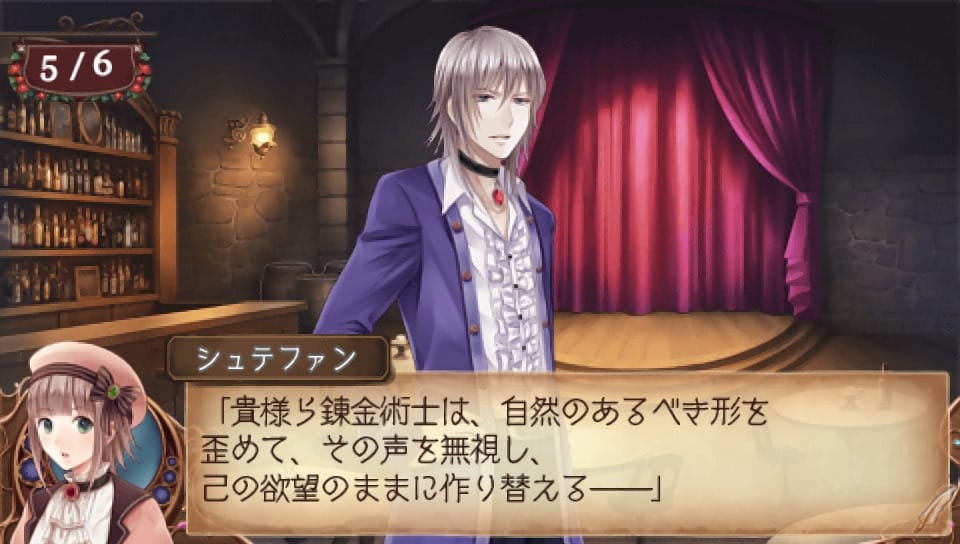
Stephan’s hatred for the academic alchemy of the kind ‘alchemist bastards’ like Meriela practices and studies is how they ‘distort the forms of nature, ignore their voices, acting in self-desire to remould them.’ Musicians like him are ‘those who hear the voices [of nature]’ and alchemists ‘those who do not.’ This blindingly oppositional fury he holds allows Meriela’s relationship with him to reveal her own fundamental ideals in ways that the agreeable love interests would not. Their ideals clash most in the event that locks in Stephan as Meriela’s lover. After developing a begrudging respect for her as a person, though not an alchemist, he is incensed to find she has used alchemy to repair his violin’s broken string and Meriela is once again reduced to another ‘bastard alchemist.’ Though she wanted to demonstrate her alchemy, her distortion of nature, as capable of repair and healing, to Stephan it is still just distortion. Their relationship is repaired and progressed when Meriela repairs, of her own volition, the string by herself. In expressing this sincere respect of his ideals, she asks him to respect her own, to believe in her alchemy. He accepts and asks for her hand, and a choice to accept or waver is given. This is plainly successful romance writing; I can appreciate an empathetic lovers’ compromise on ideals, but as a fan of Shōda as a writer it is disappointingly inert. The ludic experience here is a series of basic logic circuits and binary choices that progresses a passively occurring intimacy.
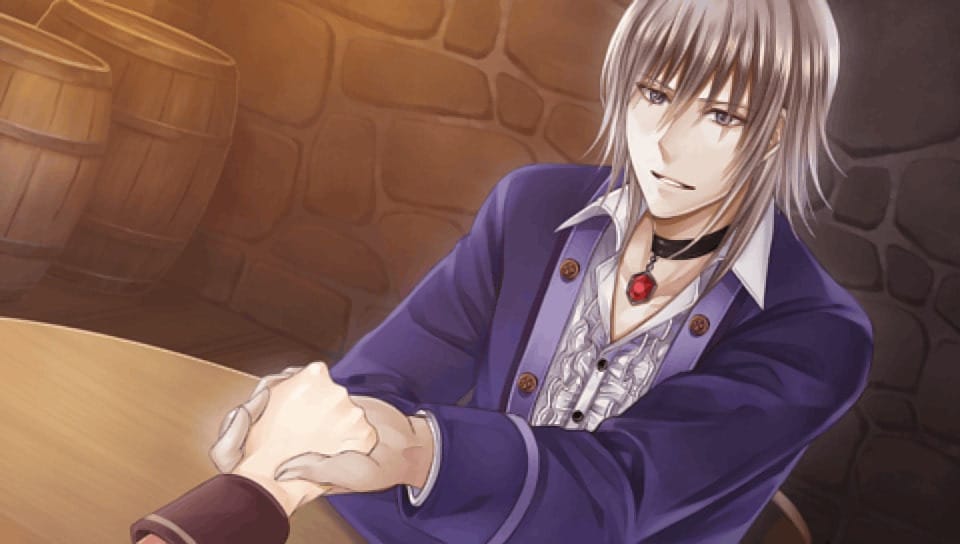
This passivity of play is perhaps only natural in the adaptation of RPG sensibilities to novel-game sensibilities, and for any other otome game this would not even be a remarkable observation to make. In light of this game’s lineage and succession, however, it appears as a retreat of ideals to fit the shackles of genre - a genre that prima facie defines itself as a gendered embodiment of womanhood: the maiden, the virgin, the otome. Where other radical and adult games in the genre - like Yoshiwara Higanbana, to recommend one - do struggle against this restraint to degrees of success, archetypal structures desire to entrench this passivity; a passivity in stark relief when set against the gender-expressive agency of a game like SaGa Frontier, a formal compromise of ideals that does not feel the least bit romantic. Disappointingly, it appears, the answer to what can an archetypal otome game be while remaining a Shōda Miwa romance and an Atelier game is not much of either.
[1] I would like to thank Sevon of the Essence of SaGa Frontier fan-translation project for their work on staff interviews from The Complete of SaGa Frontier, a source I reference thoroughly here. Though I wanted to consult the original text source I was unable to find a digitised version. Sevon’s work was quite instrumental in developing my appreciation for Shōda’s sensibilities and in putting a name to her work as an appreciator of Nights of Azure and later SaGa Frontier, and I trust their translation to be authoritative enough to be used as a source.
[*] Names rendered Family Name first, Given Name second.