
Morbid Curiosity In Club Suicide
Otome, a genre targeted to teenage girls and young women, often shows an unspoken paternalism in what it deems as proper representations of its subject matter for its audience. It’s most obvious in the genre’s general aversion towards explicit sex (with occasional exceptions), but it’s also evident in how otome does not frame violent death in proximity to its modern audience. This is not to say that otome is any stranger to stories with violence and character death, but that there is a common pattern in how it is represented: whether as historical drama, like in the Hakuoki series, or as pure fantasy, even one as dark as even if: TEMPEST can be, the violence is rarely contextualized within a modern world. One would be hard pressed to think of an otome taking place in a mundane present day setting, without a supernatural or magical twist, that isn't a romantic comedy that excludes bloodshed. Within otome’s boundaries that shape its idea of what the young feminine perspective must entail, grievous violence–especially suicide, an uncommon occurence in the genre–must be held at arm’s length; at most implicitly, never explicitly, related to the modern condition.
Club Suicide, then, aims to cross these boundaries because it situates the violent death of suicide squarely within modern society. It makes this clear right from the start: the first lines of narration from protagonist Shindou Ringo are of her own thoughts on death, of potentially ending her own life as an asocial shut-in, joining the titular secret high school club where students agree to kill themselves on the deadline of a week's time. She rethinks her own suicide after seeing the determination of the other club members to kill themselves, but she does not stop thinking on the subject itself, choosing to follow the whiff of death on the others to find out what makes a person truly want to die. An intro that teases CGs of characters falling from tall buildings or slitting their wrists only serves to make clear that violent death hangs over this story, as if a warning to the player and Ringo that they may find exactly what they seek. Suicide is not just something that can happen in the story, but a central force of it.
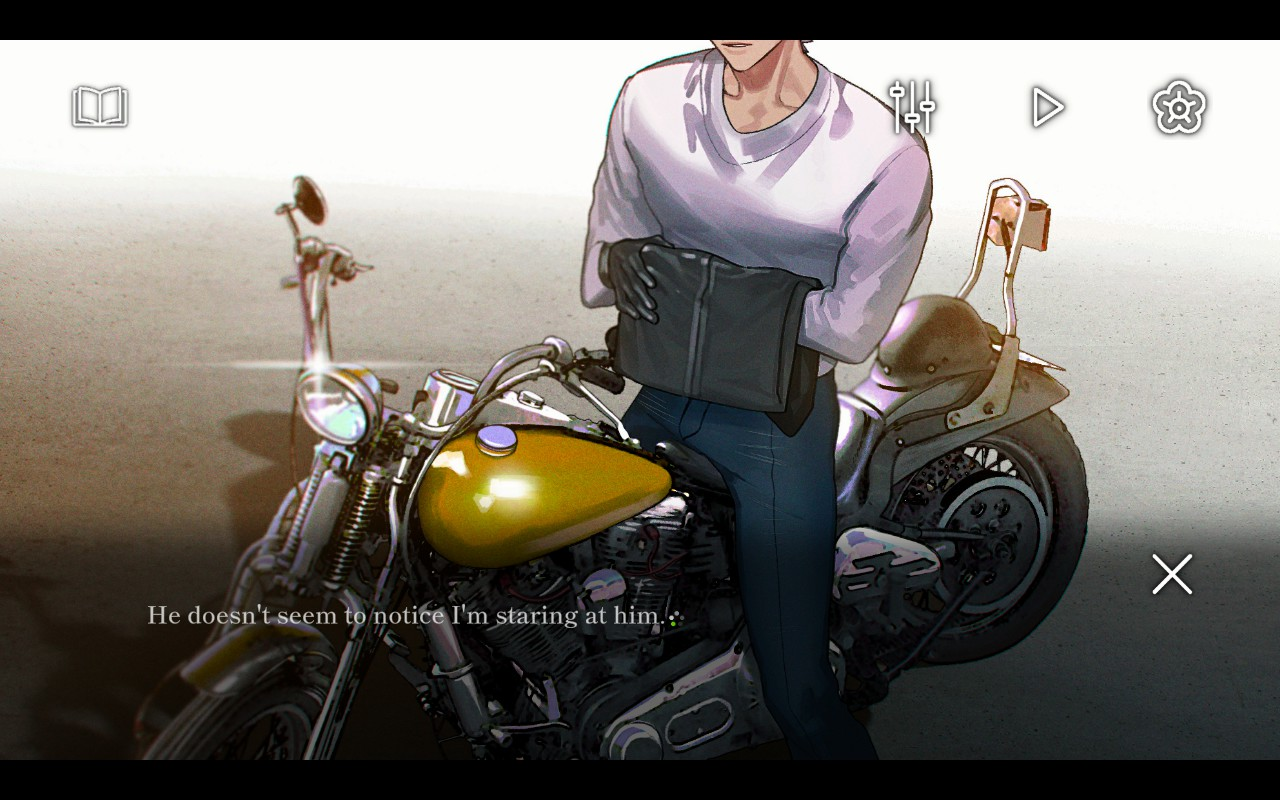
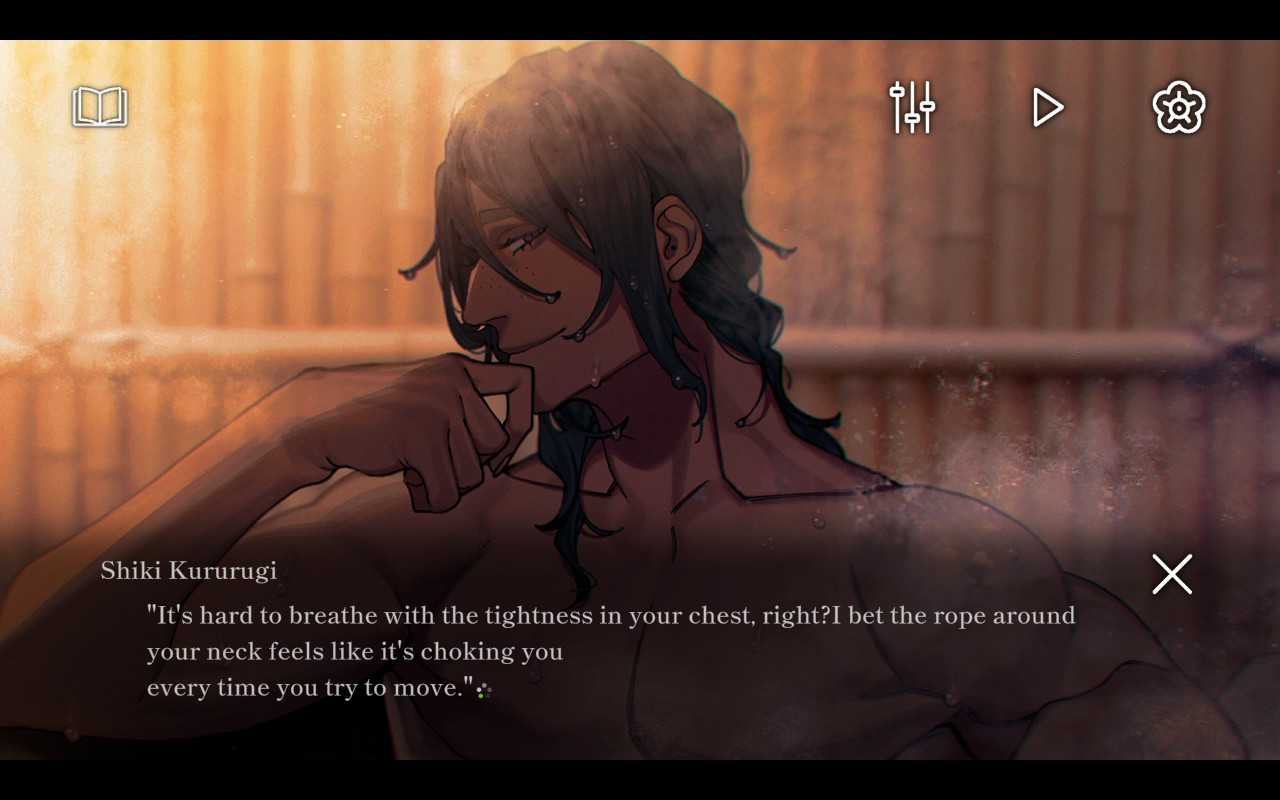
So central, in fact, that the question of suicide displaces heterosexual romance, a pillar on which otome rests, as the main focus of the game. The DLSite page for Club Suicide includes an "anti-romance" tag, as if to warn an audience that has accepted building romantic relationships with love interests as a given of the genre that none of that will be found here. In the narrative itself, Ringo insists that her curiosity for the club members is not sexual interest (though she may state when they strike her as handsome or attractive), and even when the good endings for each character are reached, her deepened relationship with them is never conclusively framed as a romantic resolution. Shiki Kururugi's route would seem to follow a romantic path only to pointedly invert it; Ringo offers to be his girlfriend as the first step for getting him to trust her, for him to eventually realize what he really wants is to be understood platonically. Club Suicide can discuss sex in fairly frank terms in instances like this, but it chooses to textually sidestep, or even outright deny, the question of romance blossoming between Ringo and the other club members. No matter how character routes end, as far as romance is concerned, they are marked by ambiguous non-consummations, a marked distinction from a genre all about pure consummations of love.
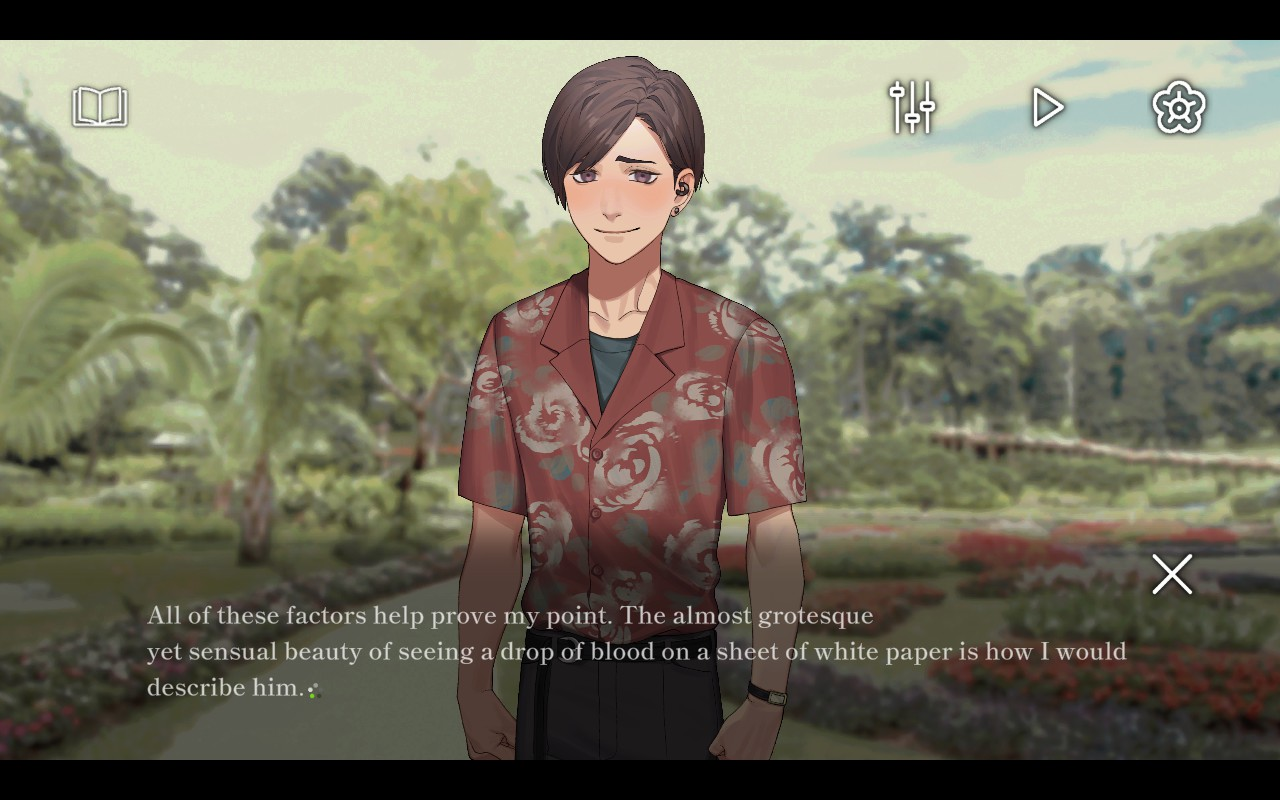
Yet the game can still be considered, structurally at least, as an otome. Club Suicide is still about a female player character's relationships, platonic or otherwise, with male characters–or rather, characters immediately codified as male from the start. The means by which the player gets these characters’ best endings is functionally not so different from how the otome player would make choices that would seem most fitting, or otherwise made with the best intentions, for the prospective character they want to romance. The game also still carries some amount of sexual tension between Ringo and the club members that would be expected for the genre, even if it’s not meant to be realized. Sometimes it’s utilized for comedy, as in a scene where Ringo unknowingly falls asleep in the same bed as one of the boys from the club, who is awake and painfully aware of her the rest of the night. Other times, though, it bubbles underneath even scenes where romantic connotations are rejected textually, as when Ringo and one of the club members share a bath and even kiss as “an experiment” for which “gender and love have nothing to do with”. This unspoken tension through the feminine perspective makes the game distinctly recognizable as otome, and so it can speak directly to an otome audience–even if it's a niche of that niche, as a doujin work–as it diverts from the genre’s expectations with the baseline it establishes.
Club Suicide’s deviations don’t grate against the sensibilities of its genre for what borrows from boys love, otome's sister for feminine expressions in visual novels. For no shortage of 18+ rated games in the genre, BL is historically expected to be more explicit than otome, with sex and violence able to be rendered in far more gruesome detail. BL has greater capacity to directly grapple with violent death, including suicide, and unlike other eroge that do so, it is usually with an audience of primarily women in mind. The male characters in it exist both as conduits of heterosexual desire layered with homoeroticism and, directly and indirectly, are de-gendered subjects to/enacters of violence to each other without it reading immediately as misogynistic violence (not to say BL can't be misogynistic, but that a readership of largely women would be more compelled to see violence happen to men by men). These two ideas often intertwine too, as in many BL games it’s not just that sexuality and violence are separately depicted, but how violence itself is sexualized. In Slow Damage, for example, the scars of its protagonist are always visible in H scenes, and fresh ones may yet be made in the space of those scenes; libidinal images carry a sense of danger beyond their sexual explicitness, and violent images are, in turn, eroticized.
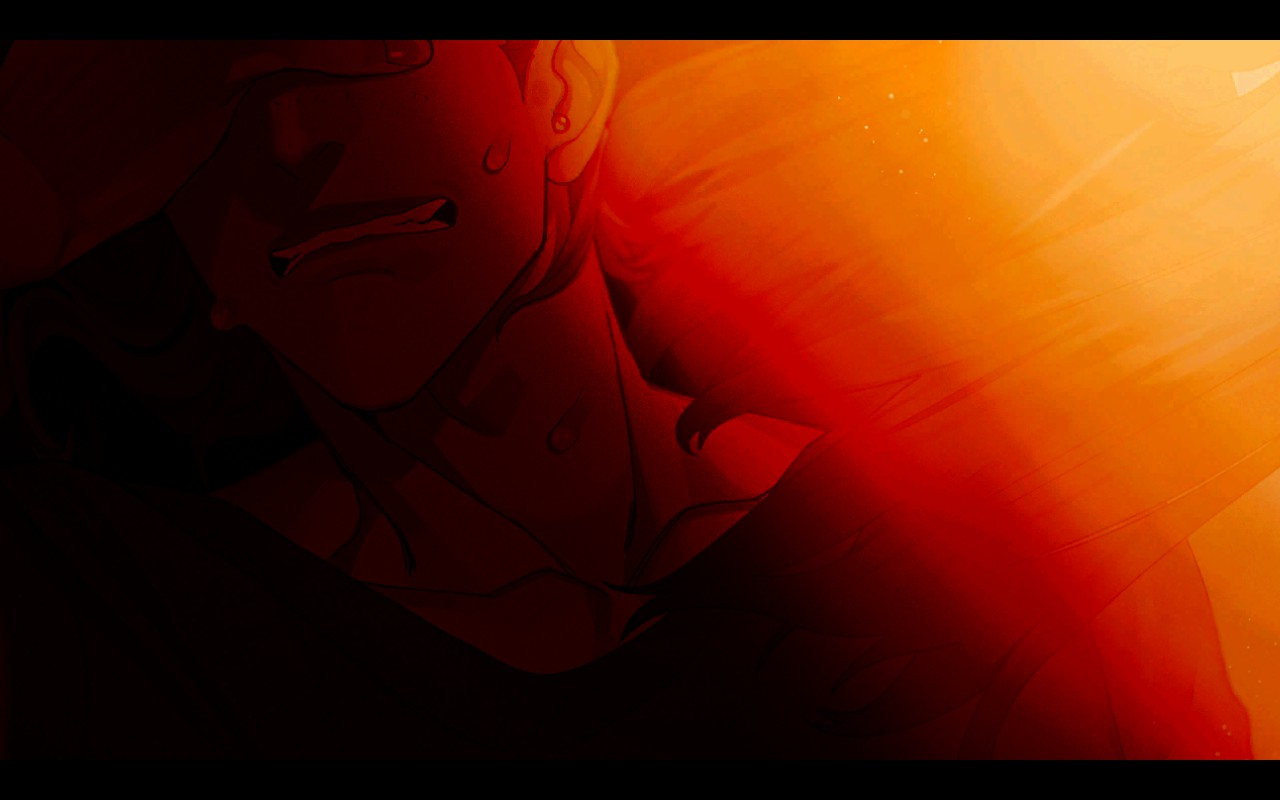
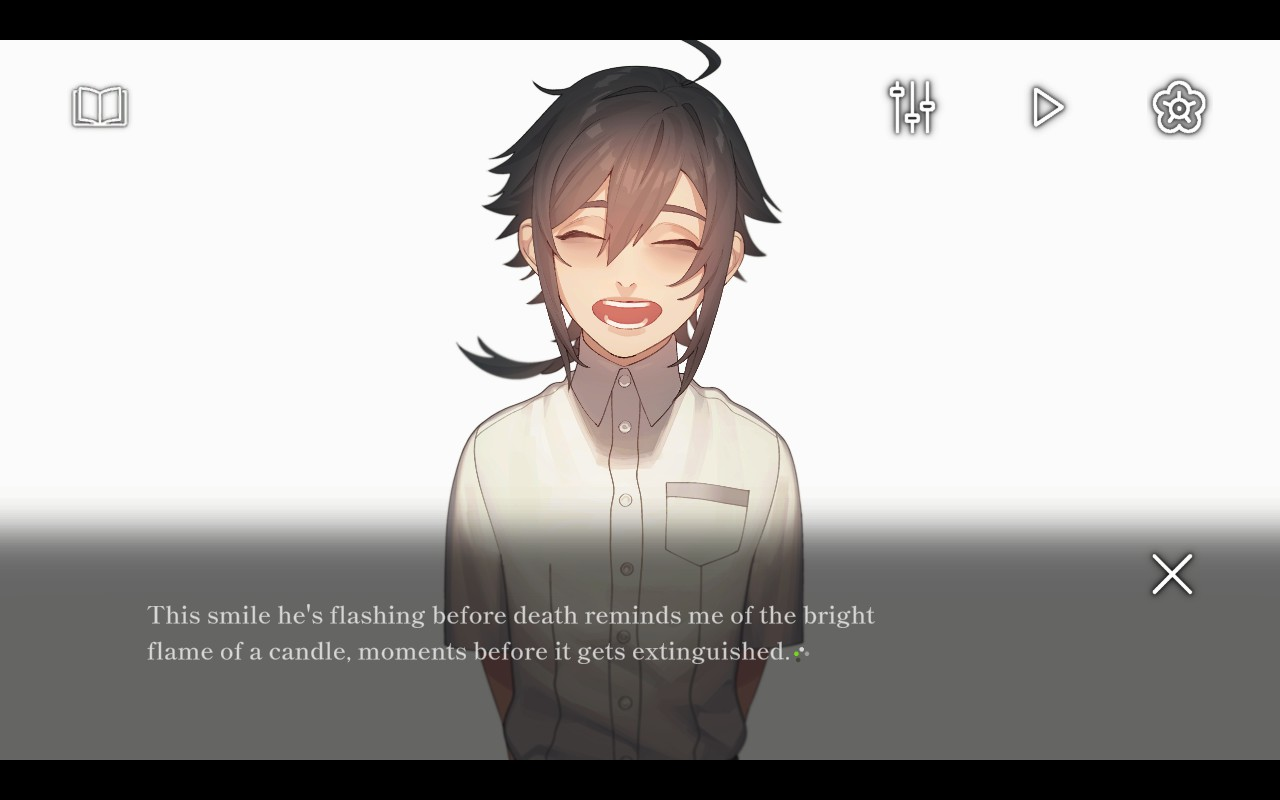
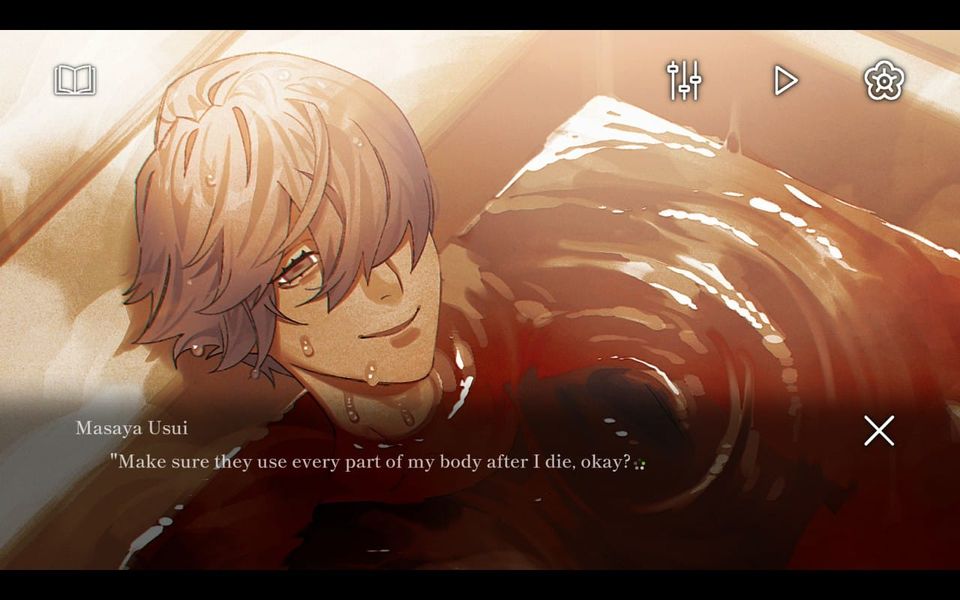
Club Suicide may not reach the extremes BL can, but from BL one can see how the game gives itself permission, being another genre for women by women, to try a range of subjects and moods that otome rarely goes for. It’s immediately noticeable just from how much closer Club Suicide's aesthetics hew to BL than otome, as one can draw lines between Club Suicide's more self-serious, desaturated color tones that render more intensely handsome figures and the look of something like sweet pool. This extends, if in more subtle ways, to BL’s eroticized lens for violence, as the handful of more explicit, grislier bad ending suicide scenes are composed with a level of aestheticism that entices the player to take it in, even as the content is meant to discomfort. Beyond the initial shock of the aforementioned CG of one boy slitting his wrists, there is a latent erotic intrigue to the way ruby red blood gushes forth from his arm, midriff showing as he holds his shirt in his mouth. In another scene where a character overdoses, his seiyuu can be heard choking and gasping as he acts out the character’s death throes, both harrowing in its desperation and sensual in its breathiness. In moments like these, Club Suicide, despite reiterating its imposed sexlessness, curiously approaches the H-scene territory that the “ryona” genre tag on its DLSite page impishly hints at.
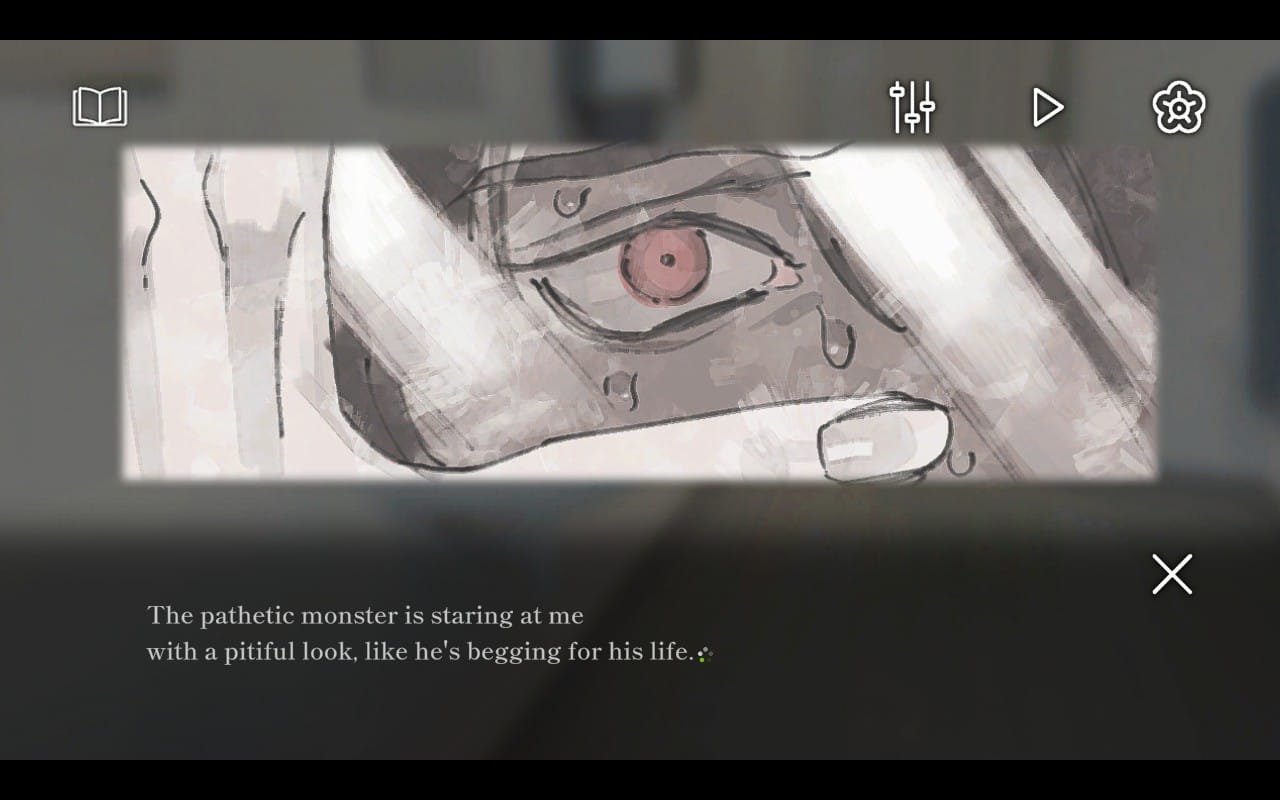
It’s not that these scenes are literally meant to be titillating, and only a handful of the suicides are so luridly depicted, but they are most illustrative of this idea of death as something we are at once repelled by, yet innately drawn to. After all, even if a player doesn’t necessarily want to see the suicides of the bad endings and intends to avoid them, isn’t the possibility of it what compels them forward? It’s a question Ringo struggles with herself, in her choice to follow each member in their path towards death, and to stay with them no matter if they live or die. It is partly to respect their own decisions that she won’t interfere, but she also describes her desire self-effacingly as an “immoral interest and curiosity for life and death…[that has] turned me into someone who tries to wiggle her way into places she doesn’t belong.” For how she constantly disparages herself as a “hopeless phony” and “an irredeemable spoiled brat” for her perceived lack of courage that the other members have for wanting to go so far to die, she frames herself as an outsider looking in. It’s not that she wants the characters to die, as she offers her opinion that they shouldn’t before they go through with it, but that she wishes to see how they confront death, so that she (in her mind, at least) will not have to find that resolution herself. The sexual tint of these suicides, then, paints a voyeuristic fascination on the part of both her and the player, who watch to see if either death will reveal itself or be narrowly avoided.
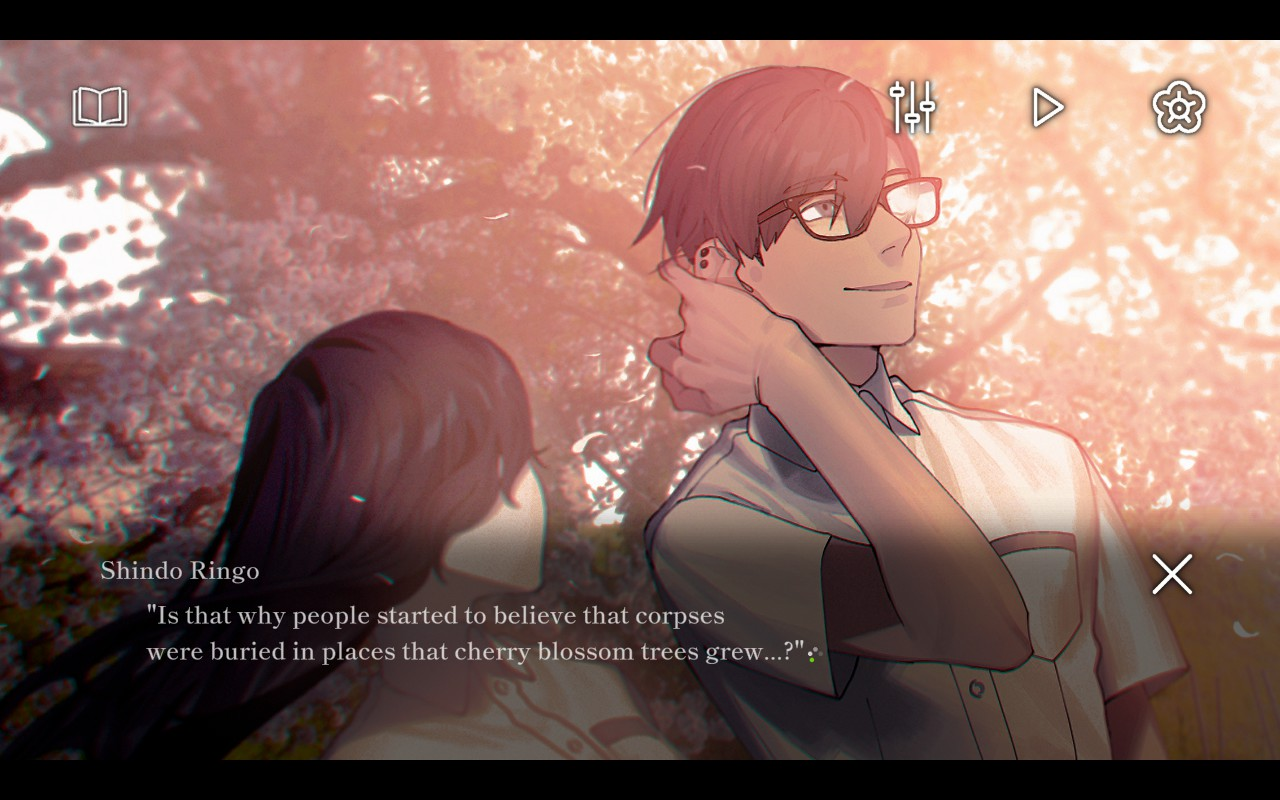
To emphasize the sense of distance between the curious subject and the object of desire in the thrill of potential death that lies at the heart of this voyeuristic perversion, Club Suicide, for most of its runtime up to the bad endings, doesn’t barrage the reader with constant explicit images or have an exciting plot with many violent happenings. The game is surprisingly deliberate in pace and mostly non-dramatic throughout, as most of the week Ringo spends with each club member passes by in largely ordinary ways, such as seeing how their family is at home, or going on date-like outings together, or otherwise day-by-day helping them reach their goals before their deadline. With little urgency, characters are given space to discuss what death means to each other, to think on it philosophically, or simply distract themselves with life’s smaller joys, as if to neutralize death’s omnipresence even as each character's probable suicide approaches. The desire of the club members to die, and Ringo’s desire to see death confronted by others–linked to the player, complicit in her voyeurism–is set against this inertia of a (domestically) peaceful first world that obfuscates real death, leaving the characters to conceptually consider it in place of how rarely it’s encountered in the flesh.
But the normalcy of this slice-of-life doesn’t belie the story’s possibility for grotesque climax, so to speak, for how it both hides death in the real and conjures ideas of death to come. Within these characters’ discourses and thoughts on death, the player makes choices to decide what path the story will take to the end–ones that relate more to members’ otaku-coded comfort hobbies like love for yuri, cosplay, plush-making, etc. are the ones to pick for good endings, but it’s not always clear which may count towards a bad ending. When choices are seemingly equally weighted, with no clear logic as to which is best, paranoia for what could happen may kick in. For the same character who may slit his wrists, for example, the player may choose to organize collage artwork with him over carrying vases that may break into sharp shards, or be careful about choosing to ask why he wears long-sleeved shirts. Even if the player intends to be on track for the good ending, it’s not possible to know until it’s reached, and this ambiguity generates a sense of unease and anticipation for how the club member’s fate is balanced. The uncertainty becomes similar to the meta-gaming will-they-won’t-they anxiety that underlies romantic conquests in other otome; the question of narrative consummation endemic to the genre is not actually done away with, but reframed to be about life or death, not love or lack of it.
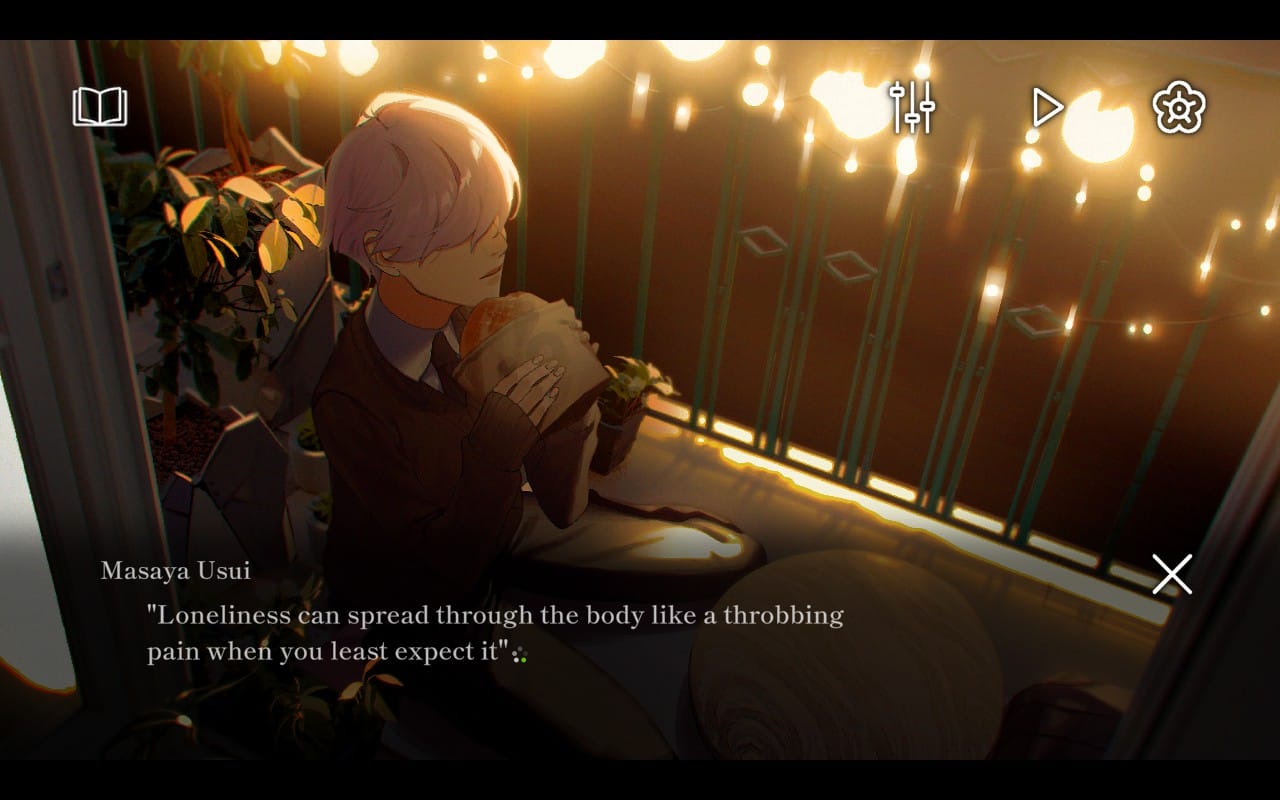
In this intermingling of the fear for consequence with the desire for climax, Club Suicide complicates the subject of death outside of utilizing it for tragedy or shock value. The relaxed pace and mundane happenings of the game practically act as counter to these omens of thrilling confrontations with death down the line, foregoing judgement of the club members, Ringo, or the player that their desire to die or to understand death is wrong per se. It’s a condition of the modern society we inhabit after all, with its rarity of death, that we are only left to imagine suicide in terms of escape, or as excitement, or as an end to a story. The game, ultimately, seeks to normalize ideas around suicide within a genre that is notoriously strict in what may be represented as appropriate for modern women, to give language to what has been too taboo to be spoken on within its confines.
But those scenes of confrontation, nevertheless, have provocative implications; the same romantic fixations that cause the otome player to complete character routes is what keeps them transfixed on characters in suicidal turmoil, the heightened moment of their death to be consumed as something like pornographic CGs in eroge. Ironically, as part of the game’s normalization around suicide, the sense of danger within the taboo of it is paradoxically leaned into, the concept of death charged with repulsion and seduction within the same space. Club Suicide doesn’t simply reject the genre’s maidenly romance inclinations, but, within the question of what drives the player and the protagonist that’s left unanswered from this rejection, disturbs the boundaries of otome on a more visceral and almost transgressive level. Curiosity for suicide itself is rendered as an abject desire simmering underneath a deathless modern world, left for the player to wonder why it is we would watch what we are supposed to look away from.