
A Cure for Malice

The climax of Kiyoshi Kurosawa's Cure is when detective protagonist Kenichi Takabe confronts Kunihiko Mamiya, an amnesiac mesmerist who has been instigating a string of murders across Tokyo. Instead of besting this chaotic figure in their ongoing battle of wits, Takabe finds himself venting to Mamiya about the deep frustrations of his domestic life and how they are exacerbated by his demanding work life. Takabe's wife Fumie requires near constant supervision, both by Takabe and occasionally by psychiatrists at a facility.
Fumie is prone to wandering about the city for hours at a time in a daze. Although the film never formally diagnoses her, her symptoms are best described as dissociative fugue. Sometimes she's temporally present and at others, like the very opening scene of the film, she's absent in body and mind. She recites the tale of Bluebeard and the psychiatrist working with her comments that she seems fixated on this story. Does part of Fumie fear Takabe? Does Takabe hate her deep down?
In his rant to Mamiya, the truth conveyed is murky gray. The detective loves his wife sincerely; even as he resents the burden of supporting her he resents his job role just as much. He lays the blame on people like Mamiya, who cause society to dissolve into havoc and force people like him to neglect his personal life. Throughout the film, Takabe uses his job to financially and medically support Fumie, and he has aspirations to go on a vacation with her at the close of the serial murder case. Yet, since there is no way to guarantee the end of cases such as the one centering around Mamiya, Takabe's detective life eclipses any part of his personal life he wishes to keep as an oasis.
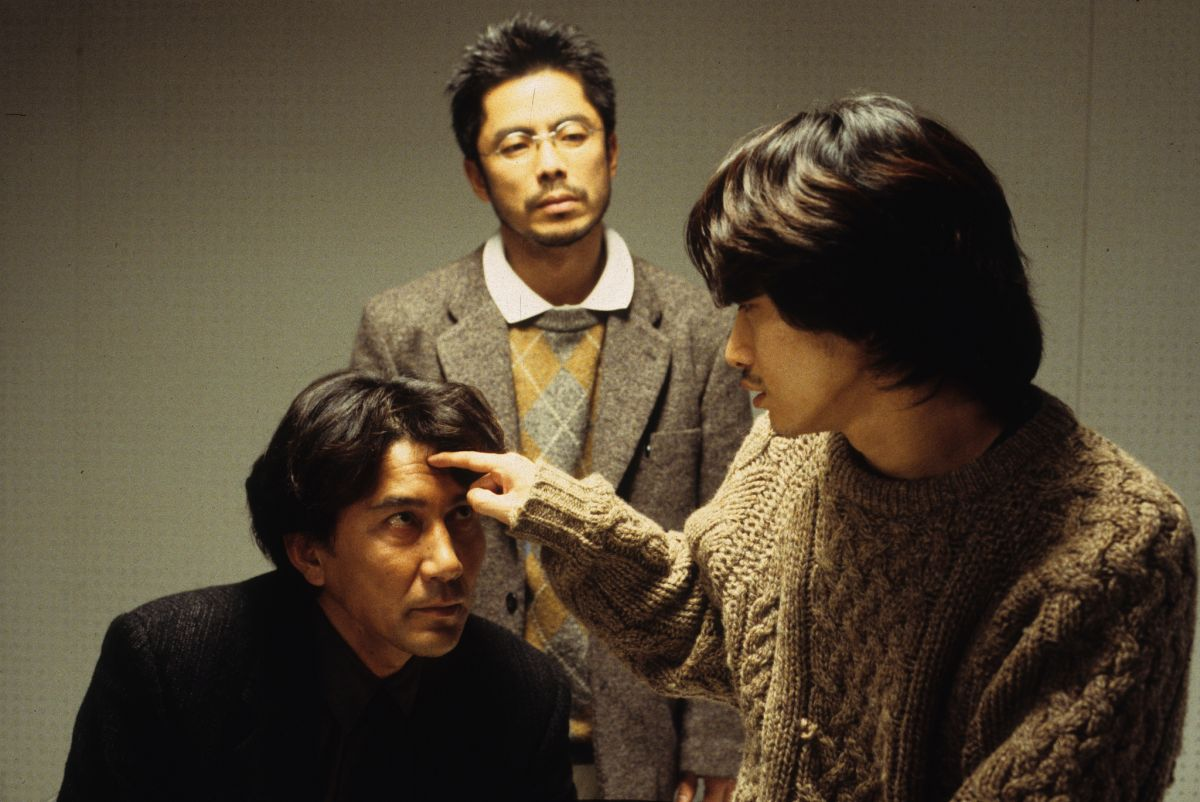
Yet Mamiya, as a neutral yet insidious third party, has a different view of Takabe's situation. He simply points out that it's difficult for Takabe to fulfill his role as a brilliant detective when he has a "crazy wife". He also asks Takabe if he knows which of his roles, as detective and as husband, is the one he truly identifies as. Mamiya believes that in spite of Takabe striving to keep his work and private life separate, Takabe has hollowed himself out in the course of doing so. "There is no real you. Your wife knows that too." Although Mamiya is arraigned for incitement of murder, Takabe's mental state starts to rapidly unravel after this. Even as he accuses Mamiya and societal pressures for fracturing his personal life, Takabe takes Mamiya's words to heart. The societal expectation to perform a perfect persona or "face" as it's known in Japanese culture has exhausted him to the point of exasperation. Related to the concept of face and what is critiqued throughout Cure is honne and tatamae, translating roughly as true feelings and superficial/agreeable feelings. Takabe has only truly expressed his feelings in this scene with Mamiya. The detective maintains in the thick of this conversation that he can forgive his wife, but he can't forgive someone like Mamiya, who willfully disintegrates the public order.
In a sense, the real antagonistic force beyond Mamiya is this near-impossibility of performing the professional or the private self in modern Japan. Modern society's strictures and breakneck pace provide no space for the private self to decompress and compartmentalize from daily stressors and past traumas. More to the point, Takabe and Fumie's relationship is fraught because they live in an increasingly frenetic society, one that offers them no relief from their demanding public lives, bound up as they are by their respective organizational and institutional identities. Takabe is doomed to be a calculating, solutions-obsessed individual by the film's close, whilst Fumie is doomed to the purgatory of institutionalization, abandoned by Takabe. Both are isolated and left without care, whether from each other or from external figures or communities.
In 2016 Otome crime thriller Collar X Malice, we're presented with a more hopeful (though still ambiguous) version of such a precarious relationship, with Kei Okazaki's romance path. First, some context. The terrorist group Adonis is committing serial murders within the Shinjuku ward of Tokyo. This cultish organization believes that by systematically dismantling and rebuilding Japan's legal system as an anarchy, they can effect a moral rebirth of the country. The police headquarters in Shinjuku is Adonis' primary target, as many of their members were victims of the inequity of the law or were former police officers who saw corruption firsthand. The vigilante executions of "sinners" become more frequent as part of Adonis' plan as they countdown to new year's day, or X-Day as it's dubbed by the group, the day of Japan's spiritual "rebirth". In desperation to contain and deal with the chaos, Shinjuku has been cordoned off from the rest of Japan and repealed its swords and firearms law. So, this Otome game is not just about love under siege, it's a quarantine narrative about questing for a new normal. Hopefully a caring new normal.
I must briefly note that this Escape from New York-esque scenario is not new to romance-driven visual novels. One example is Togainu No Chi, Nitro+Chiral's first and controversial BL release, which also featured a protagonist who becomes ensnared in a Battle Royale scheme run out of a desolate post-WWIII Tokyo by drug-riddled crime organizations. These narratives are adept at exploring how love and caring for each other fares when beset by societal failures, but they are also adept at highlighting how love and care can become twisted by life under constant organizational control.
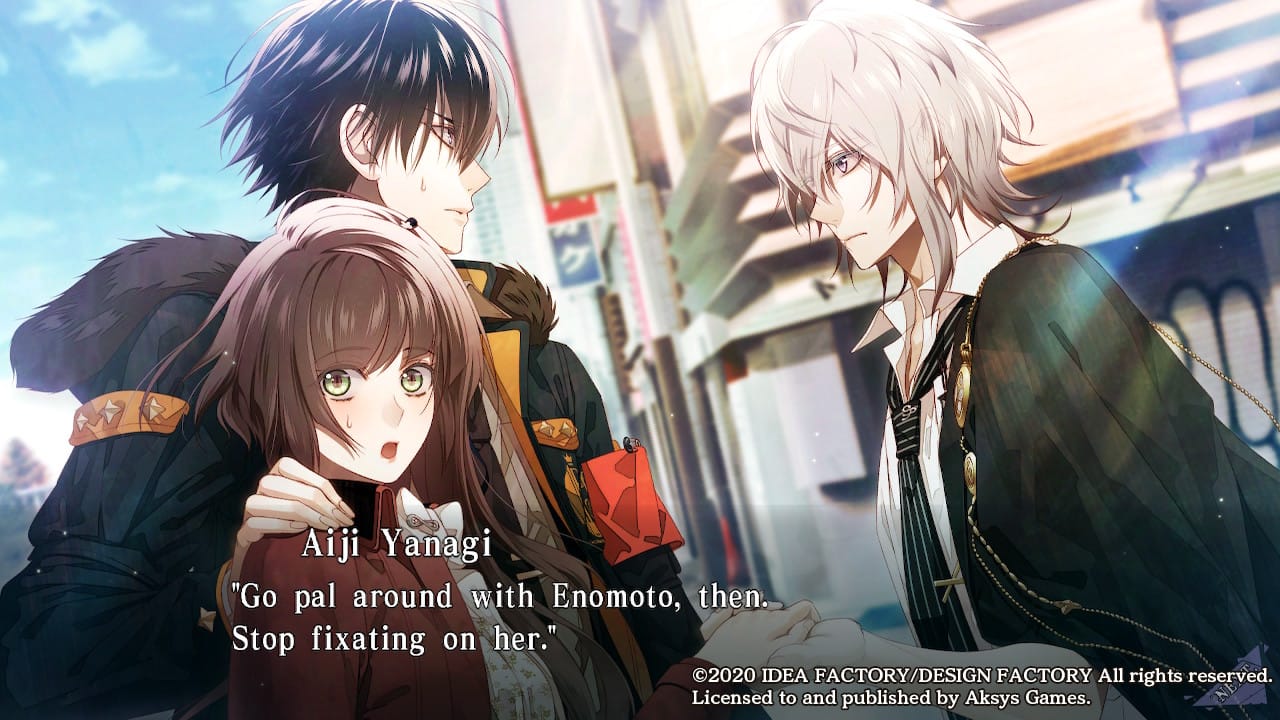
Okazaki is a special protections officer (called SP for short in the game) assigned by the police to protect and covertly surveil Aiji Yanagi, the ex-cop leading the collective calling themselves the detective office. Yanagi is the "True" or "Canon" path you unlock after playing through the four routes of the game and it's important to note that other than Kageyuki Shiraishi (a forensics analyst), Okazaki is the only character who is still associated with the police force. Unlike Shiraishi however, Okazaki is also unaffiliated with Yanagi's team of former officers and therefore is treated with understandable suspicion; from the start of the game it's known that Adonis has planted a mole within the police HQ.
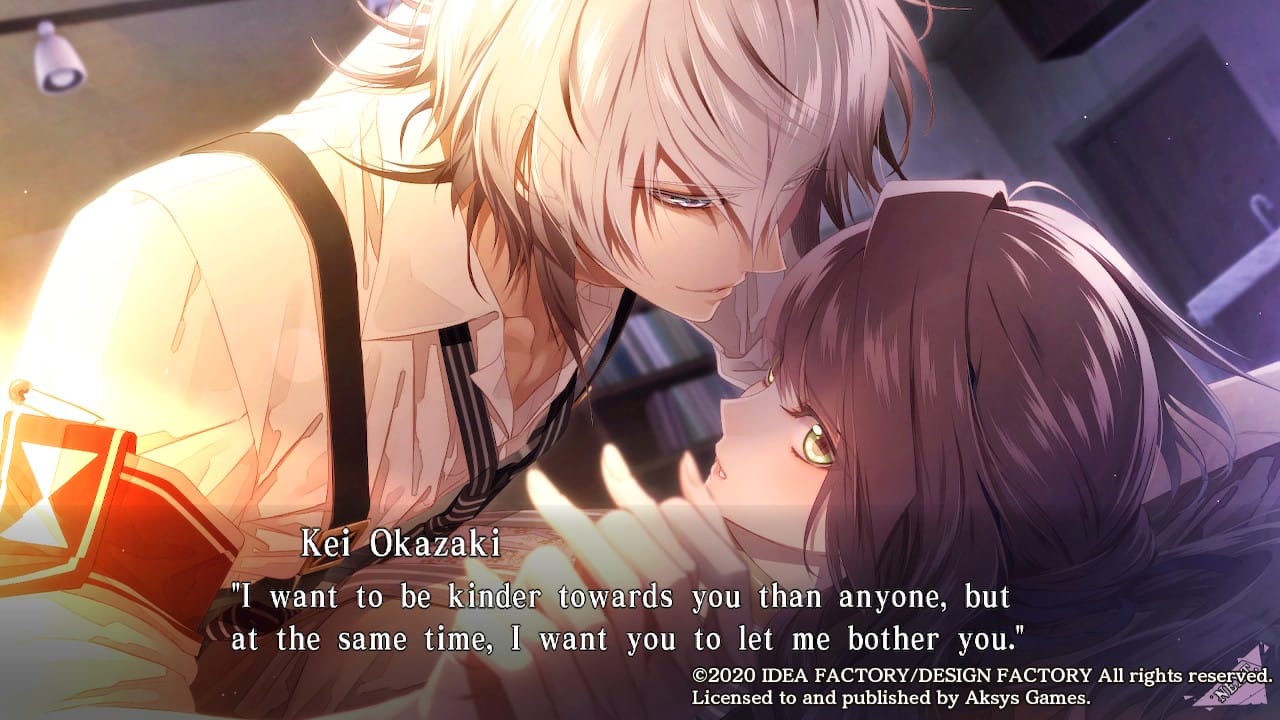
Like Takabe, Okazaki's identity has become enmeshed with his job role to a toxic degree. A lot of his romance arc is about getting him to reflect on how much of himself he's sacrificed to that role. SP officers are larger-than-life figures, both in the police force and Shinjuku at large. This reputation puts extra pressure on them to protect their VIPs at all costs. Although Okazaki displays a cheery and nonchalant manner on the surface, he is always on the job. He rarely sleeps. When he does it's often in public areas. Case in point, during an early encounter with him on the way home from her first meeting with the detective's office, Hoshino notices that Okazaki has a sleeping mask sticking out of his pocket. Soon after she sits with him on a park bench at his insistence, he falls asleep on her shoulder. One of the dates Hoshino has with him later in the path is a platonic sleepover at her place and she learns from this that although he does have his own apartment, he rarely comes home to it. He does have hobbies, like collecting and watching horror movies, but most of his life is spent on the job surveilling Yanagi and eventually Hoshino— especially after he learns more of the danger that Adonis has put her in by collaring her.
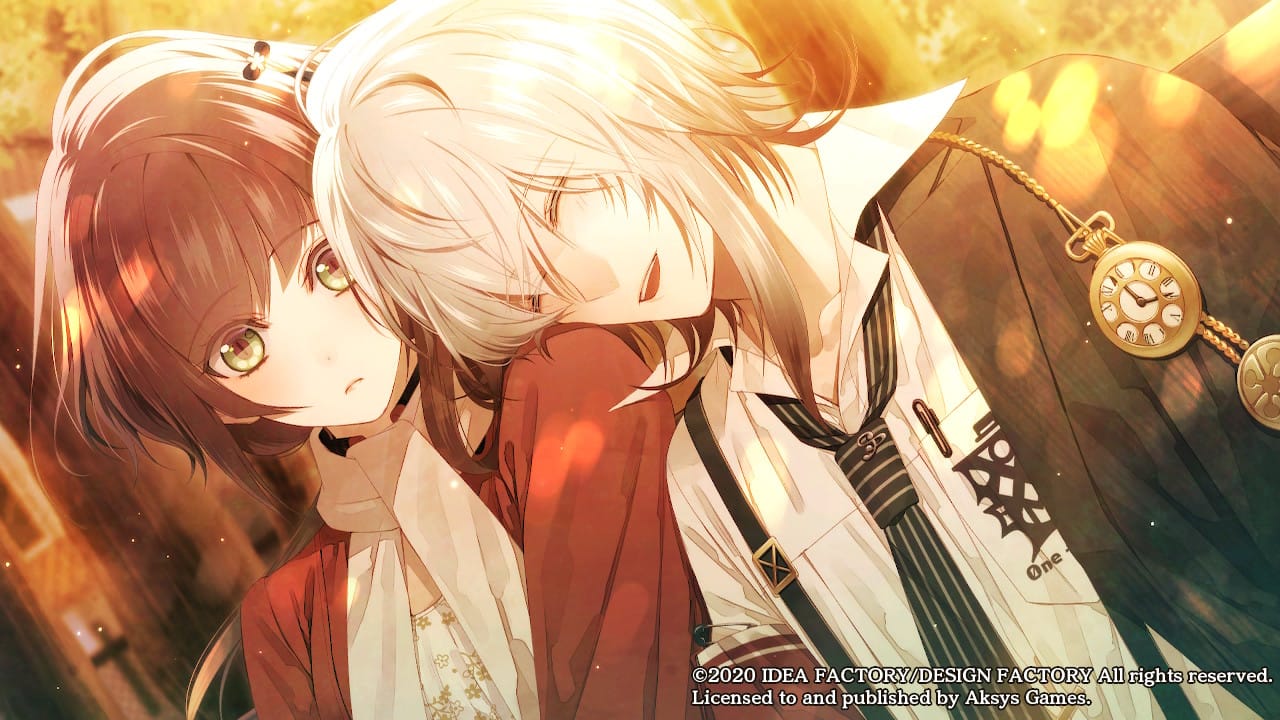
Hoshino is a rookie cop, a small town woman whose parents own a small inn. She moved recently to Shinjuku alongside her rebellious teen brother, to whom she's become more of a guardian to than a sibling. As Yanagi says to her during his romance path, Hoshino's secret weapon is how green she is to the police force. Working primarily as a first responder at the call centre of the Special Regions Crime Prevention Office (hereafter SRCPO), Hoshino's sincerity and empathy is genuine although her deductive skills need some honing. Her most desirable quality outside of her kindness for each of her prospective partners in any given path is her domestic nature. She is also a crack shot and there's a special "Trigger Mode" for specific scenes where the player must time a shot to decide between a good or tragic ending. Her gun skills are mostly an extension of how steadfast she is in her cause as a police officer who believes the force needs reform. Her desire to root out the corruption and abuse from her workplace and by extension Shinjuku is what compels Adonis to target her. Hoshino often works overnight at the SRCPO office and has to be formally sent home by her boss to rest. Despite her restlessness, Hoshino takes solace in trying to recentre herself and reconnect with her estranged brother and others via domestic activities. The game has more than several scenes or conversations emphasizing how talented Hoshino is at home cooking and cleaning and this is contrasted against her partners' abilities to caretake for themselves and others.
Yanagi for instance is the only romantic partner that is Hoshino's equal if not superior with regards to cooking and cleaning, but he neglects his mental health and is a noted chain smoker. Shiraishi takes good care of himself physically, but he often neglects to eat for days at a time when he becomes absorbed in his forensic work. Sasazuka, the hacker prodigy on Yanagi's team, eats mostly donuts and junk food while Enomoto buys most of his meals from convenience stores or relies on Yanagi's hospitality. Okazaki acts as Yanagi's foil of sorts and is the most extreme contrast to Hoshino, an individual who doesn't cook or clean for himself (besides employing a robot vacuum) and as mentioned above, rarely sleeps at home. There's a running joke with Okazaki's SP partner and mentee throughout all the different routes of the game that he mostly subsists off the strangest-flavored convenience store snacks. What this illustrates about Okazaki's is that he's someone who lacks the most basic care and a domestic routine that could ground him. His affinity for Hoshino is as much about her homebody nature as much as it is about convictions to make Shinjuku a safer place. And before he truly recognizes his feelings for her, it's clear that she's someone he wants to fiercely protect for himself.
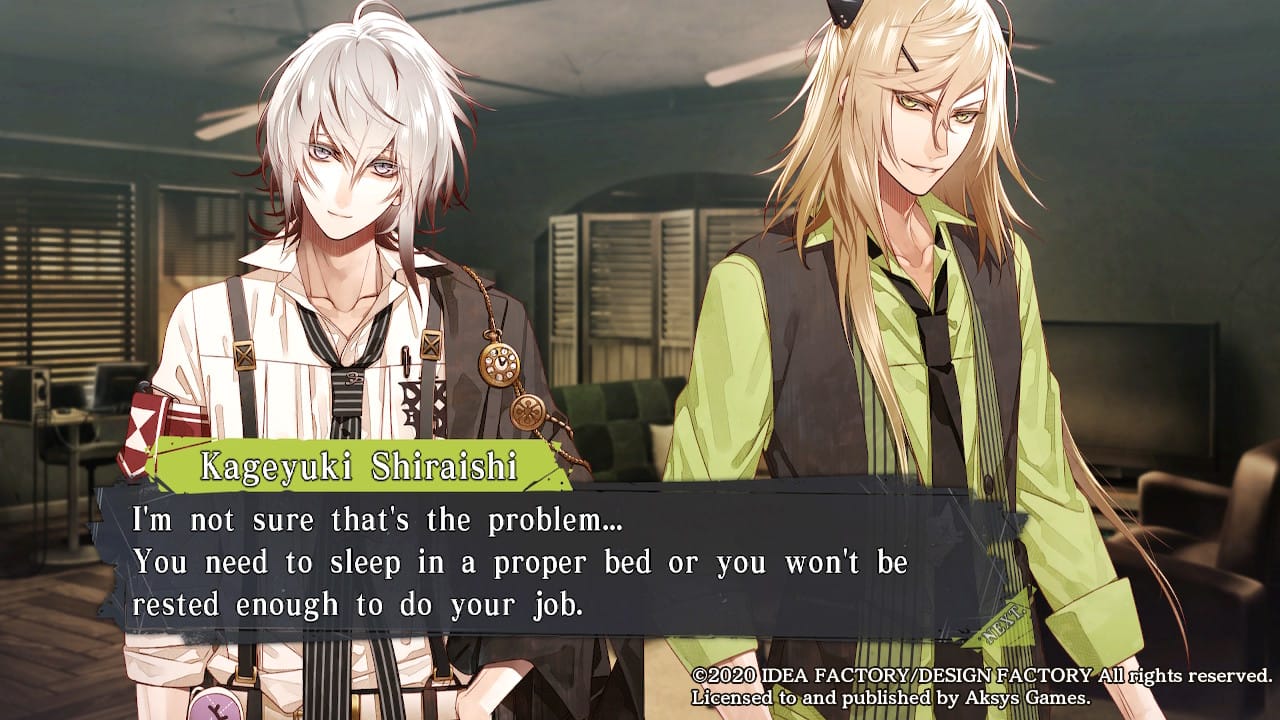
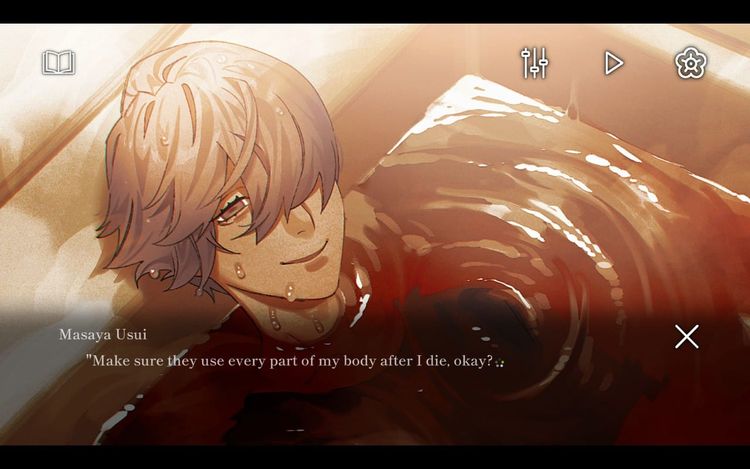
Okazaki is arguably a subversion of the Otome archetype of the yandere, or perhaps a hybrid of yandere and kuudere. The former needs little introduction, but for those unaware, the main characteristics of a yandere character are their passion and their willingness to die or kill others to protect the object of their passion. Kuudere is a similar archetype to the tsundere or dandere, archetypes known for playing it cool or indifferent (or in the case of Sasazuka, downright insulting) until their walls come down. But the kuudere type is often associated with characters who are protective of the main character or are a professional bodyguard. Okazaki reads to me as a subversion due to the fact that he wants to die a meaningful death in the line of duty, due to witnessing an old SP mentor's death during a mission gone awry. As he falls more for Hoshino, Okazaki conflates his life's mission with protecting her. A major point of contention in his romance path is convincing him that he should live for her, not die for her. His tragic love ending, in fact, illustrates how much he's grown from his relationship with Hoshino. When she dies at the hands of Adonis, he nearly decides to commit suicide to follow her, but resists at the last moment because he knows she would want him to survive.

Like Takabe and Fumie, Okazaki and Hoshino true feelings are impeded by a crisis state. Hoshino has to keep her collar a secret from Okazaki for about half of her path, in order to keep her job and to avoid Adonis triggering the fatal poison in the collar if she reveals too much to the police. When the collar is accidentally revealed to Okazaki during a house call they make to a suspected Adonis member, Okazaki doesn't hestitate to point his gun at Hoshino, interrogating her and subsequently keeping his distance until the two reconcile later on. If this was a yandere path, Okazaki would not put his SP mission above Hoshino's life, unless killing her was also a matter of obsession (ie. to prevent her falling for someone else). He also admits to Hoshino in one conversation that although he was flirty with her early on, he mostly saw her as a means to his personal goal of dying a meaningful death. When he realizes he loves her, he starts to find more reasons to live.
Okazaki's possessiveness is still very much in line with the yandere archetype, however, and he often nettles Yanagi during his path about trying to "make a move on" Hoshino. He also displays jealousy even during the best ending of his path, when Hoshino and him confess their love to each other. His mission becomes about protecting Hoshino from not just societal harm but keeping her attention solely on him. This left me with questions about whether or not this meant Okazaki was completely free of his more toxic nature of mixing his job as a protector with his personal life as someone in love for the first time in his life. There's a short story in the extra material unlocked after you complete Okazaki's path that suggests he's still grappling with who he is as someone newly in love and who no longer has to fixate on the X-Day crisis. In some ways Okazaki and Hoshino are perhaps akin to what Takabe and Fumie might've been like before their lives were subsumed by crisis, although the timelines of these couples' respective crises are reversed.
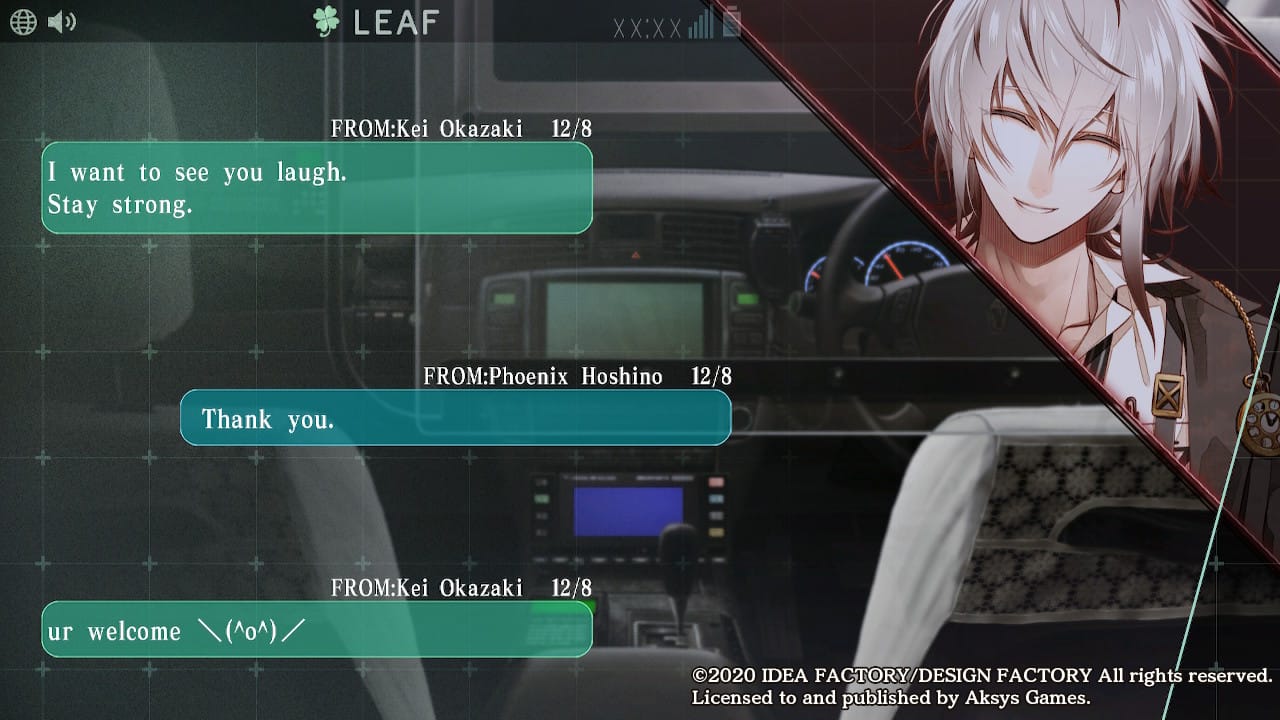
I'm fascinated by the parallels between Cure and Collar x Malice because both narratives treat Tokyo as a microcosm of Japan. Shinjuku is where Japan's government buildings are located and is historically, as the official Shinjuku Station notes in one blog, a reflection of Japan's rapid modernization. Shinjuku is also the site of major student protests in post-WWII Japan. These reasons alongside police corruption are likely why Adonis targeted this specific ward. One of the big takeaways from Collar x Malice is that everyone has their own "invisible collar" of malice that they must free themselves from. The collar for Hoshino is her striving for police reform, so that she can exist without performing in her professional capacity even when pursuing a relationship or supporting her brother's creative dream of being a musician. Okazaki's collar is his resentment over failing his past mission and feeling responsible for his former mentor's death, resulting in his death drive throughout his path. Both people are only free of their collars when they don't have to identify solely as an police officer.
To put this simply, these are two individuals who have no work-life balance by default. Neither Hoshino or Okazaki have the option during the crisis to relate to each other just as themselves. Like Takabe and Fumie, Hoshino and Okazaki cannot share their true feelings without reservation. Fortunately, Hoshino and Okazaki overcome this obstacle together, by sharing each other's emotional burdens in spite of the complications that may arise from their jobs and the threats Adonis imposes upon Hoshino through her poison collar.
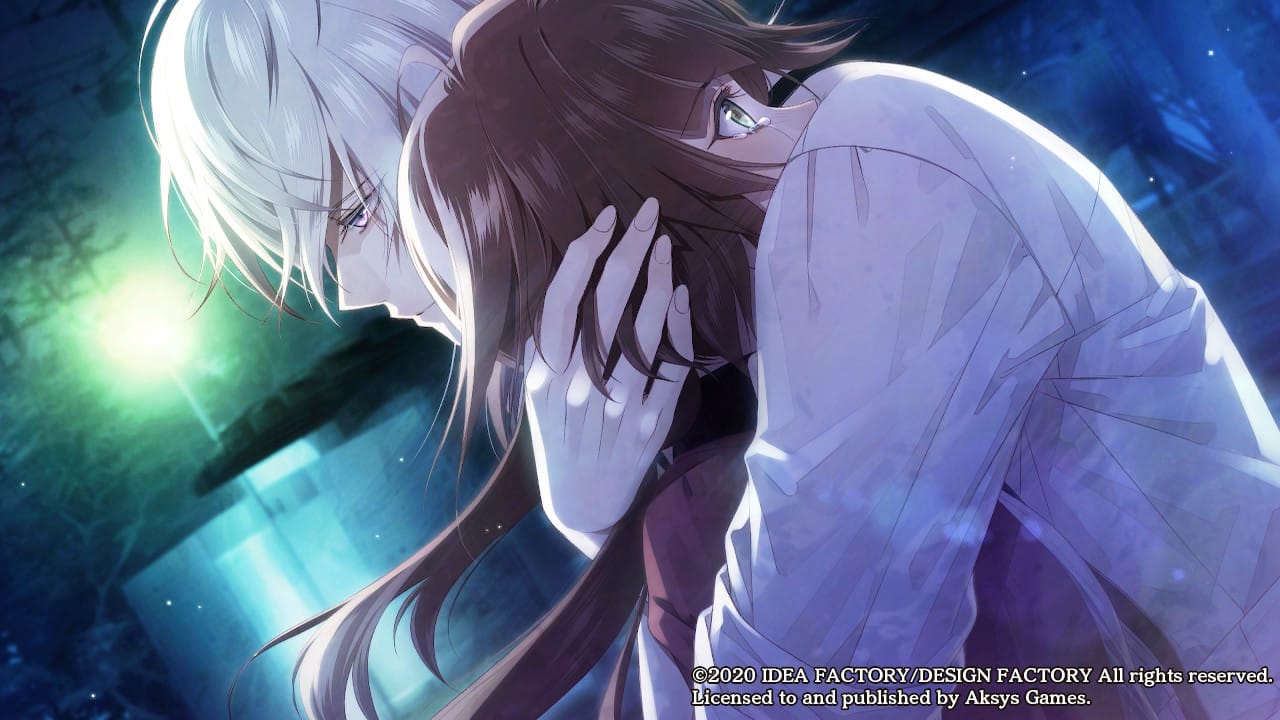
The climax of Okazaki's path is similarly cathartic to Takabe's rant at Mamiya. Hoshino decides close to X-Day that she should sneak off to Adonis' headquarters, revealed to her along with a demand that she join them or risk having her loved ones killed. Okazaki easily catches up with her and confronts her about leaving him behind, angry just as much with her lying to him by omission as he is anxious that she might die to protect him. As they embrace and decide to face Adonis together, Okazaki is freed from his collar, and soon after Hoshino is free as well, figuratively and metaphorically. The cure for one's malice is empathy for another's malice, allowing them the space to morally gray and to strive to be better than one's past self. Put another way, Hoshino and Okazaki must strive together collectively to overcome systemic failures.
This isn't the rosiest ending, either. Even in the epilogue short story unlocked with completion of Okazaki's path, it's suggested that he still struggles internally to separate himself from his SP persona. As someone in love for the first time, he's also grappling with the difference between lust and romantic attachment, remaining possessive of Hoshino. Where Otome shines most as a narrative game genre are moments like these, that acknowledge that connection and emotional attachment are just the beginning of a relationship. The maiden figure and her partner will always be reckoning with each other's true selves, for better and worse.