
A Doll's Eyes, A Woman's Hands
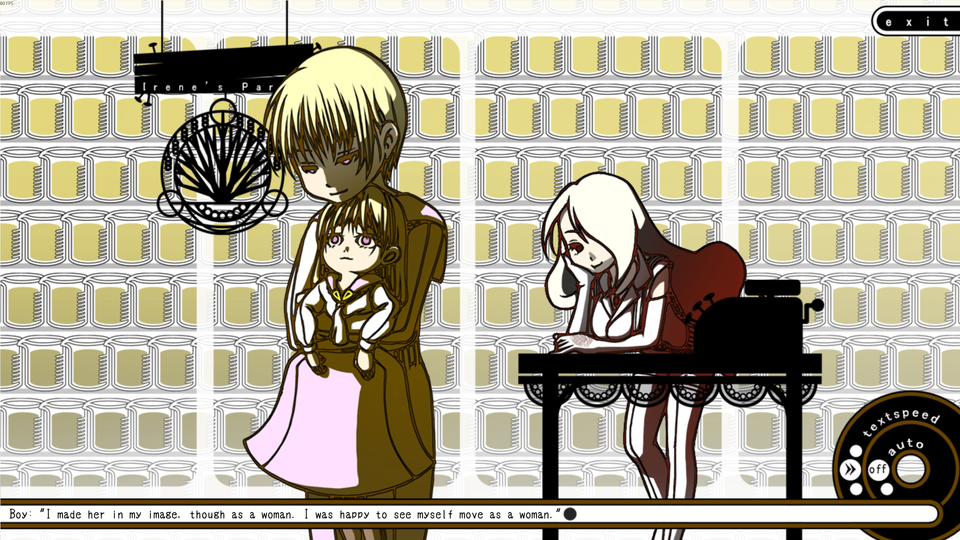
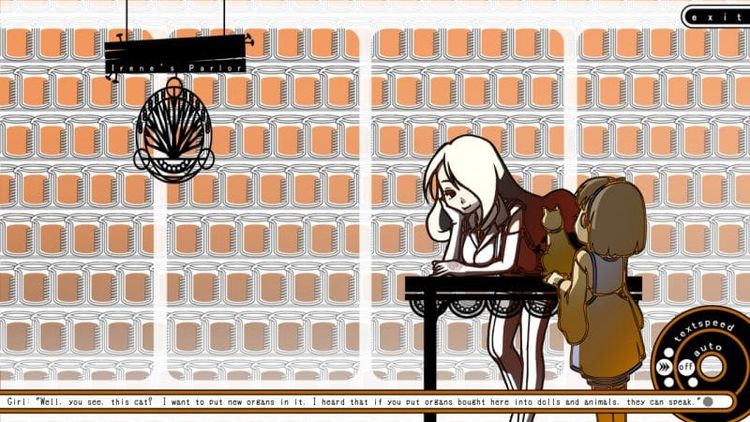
Our imagination of labor is masculine. Picture a working class hero and a muscle shirt and bulging biceps are likely to follow. The shadow of that image is, of course, the housewife, the quiet, strengthless labor that exists in kitchens and living rooms rather than factory floors. Forget-Me-Not plays with both these images. Protagonist Organa is something of a housewife, the invisible labor which makes Irene's organ plant shop function. Among their clients are boys insecure about their masculinity, ever-laboring farmers, and little girls that want their pet cat to talk. A parade of master/slave dialectics which all reflect back on Organa and Irene's central relationship. But is Organa a slave? We learn in the game's secret ending that she is the product of Irene's own tinkering with her crop, the result of Irene placing a grown organ into her dead cat. Irene is quite clear throughout the game that this will result in an entirely new being. Yet, Organa is totally loyal to Irene, unquestioning of her intentions, doing as she says. She is Irene's creation and fully herself. Not even a child, but a doll.
Though dolls are a frequent subject of video games, Forget-Me-Not takes a different tack from any of them. "Life" simulation games like The Sims are arguably digital dollhouses. Dress up games like Style Savvy or the line of Nikki games have an obvious analog to dolls. Bloodborne, Elden Ring, and Lies of P have interest in dolls and puppets. But Forget-Me-Not is absent those aesthetic indicators. There's no character creator; Organa is never depicted on screen. Instead, Forget-Me-Not is a farming game, but is totally without the pleasurable slowness of most "farming simulators." Rather than the seasonal and daily rhythms of plant life, growing organs has a factory logic. Each plant depletes water constantly, forcing the player to maintain stocks with speed. Organa's animal helpers get distracted and it takes a click to move them back into their proper place. Each session of Forget-Me-Not is a flurry of activity. But the clicker is also total reduction of economic simulation. There is not even aesthetic approximation of labor and certainly no breaks. Just the simple and clean click to make everything happen. There is action, but no agency. As Phoenix pointed out in her contribution, these are systems that would be more efficient with automation.
In common with fellow clickers Universal Paperclips and Cow Clicker, Forget-Me-Out is an economic satire of exploitation. The more animal helpers Organa buys for the shop, the more animals are depleted from the surrounding farmland. Eventually, your humble plants and pitcher gain industrial levels of productivity. Where Forget-Me-Not differs is with character focus and a requisite intimacy.
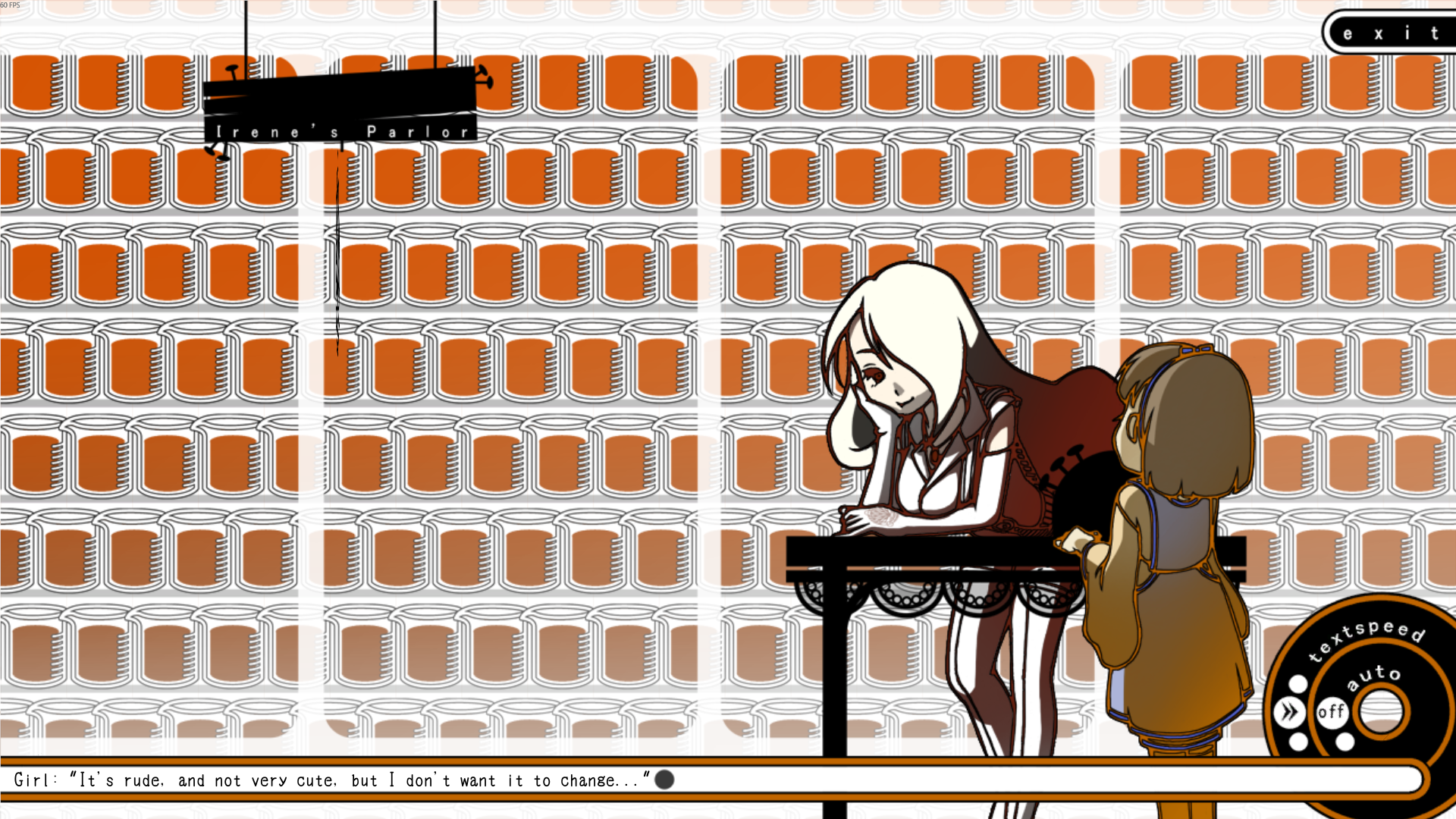
Though every relationship depicted is in some way transactional, they all also carry a kind of closeness. Irene offers advice, when her clients ask for it, and they sometimes gain wisdom from their experiences with her organs. Irene and Organa's relation is fraught yet simple. Organa is defined through innocence and an almost animal-like love. Irene is affectionate in word, and consistently expresses concerns for Organa's health and safety, but all the gifts she gives Organa are to do with her productivity. Though Organa presumably eats and sleeps and rests, such activities are never shown on screen. The game never shows a bedroom or a dining table. For Organa, there is no outside the shop, just the trips she takes into its front room. These absences underline her protagonist status. In real terms, she only exists inside the player's hands and vanishes once the game is quit. Whereas every other character has a presumed outside, a life which they must explain once they return to Irene's shop, Organa is entirely within the player's hands. Just like a toy.
This theming is present throughout the game. Both dolls and doll owners are among Irene's clients, but even the other characters, perhaps influenced by the organs floating in jars, begin to view their own bodies as malleable. One boy begins to put extra organs into himself to compensate for his natural weakness. Another begins placing organs in a doll to make it speak. A doll already extends, and mimics, the human body. But in Forget-Me-Not, the characters, spurred by the magical offerings of Irene's shop, believe they can push that extension further. They could make a doll indistinguishable from human life. Every attempt is sort of thwarted. With the recognition of new life, there must also come the recognition of independence.
The game's climax, when Organa blocks an acidic blast meant for Irene, offers a simple revelation: the player has been looking through Organa's eyes. The screen is obscured with black bile and the dialogue alludes to the loss of Organa's eye. It's almost a fourth-wall break, a moment where the player realizes that Organa has had a body this whole time and that she, like any other person, can be hurt and killed. Crucially, it is also a moment where Organa acts without the player's direct input, and not under Irene's orders.
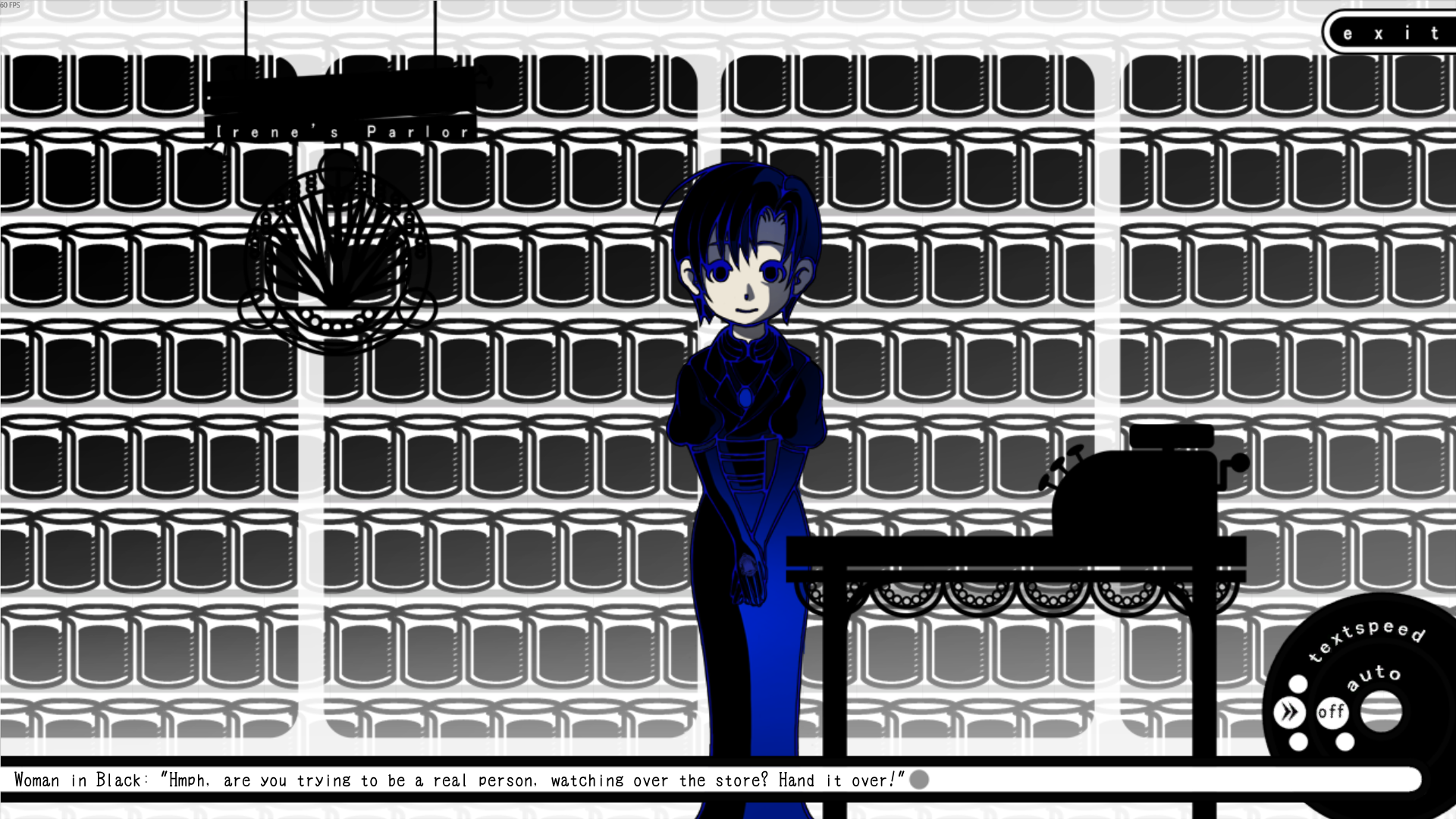
The fact is that Organa enjoys her work. She rejoices at every new animal she can place in the garden, preens with joy at the possibility of sharing an "excellent" fruit with Irene. It is only after hours of such busywork when the player can unlock the tale of Organa's origins. That ending represents another truth: While it is easy to be cynical about Organa's relationship with Irene, she was in no way coerced. She loves Irene because she chooses to. And though she acts only in the player's hands, though the physical labor she undertakes is obscured, the player cannot make her leave, cannot make her hate Irene.
This might seem odd, given her metaphor. How can a doll represent new life or intention? Perhaps in the way a plant can. Caring for a plant can make desired outcomes, the plant will still grow in ways unpredictable, still think in ways unknowable. A doll represents a kind of immortality, but with each new hand, it takes on new life. It is the touch between intention and toy that makes play happen. But that space is as ambiguous and unpredictable as any relationship. In its hard economic logics and its bare aesthetic of labor, Forget-Me-Not reveals how present those ambiguities are in every encounter between self and stranger.