

//TIER Report 002
Hello readers,
First up, we have a couple quick announcements.
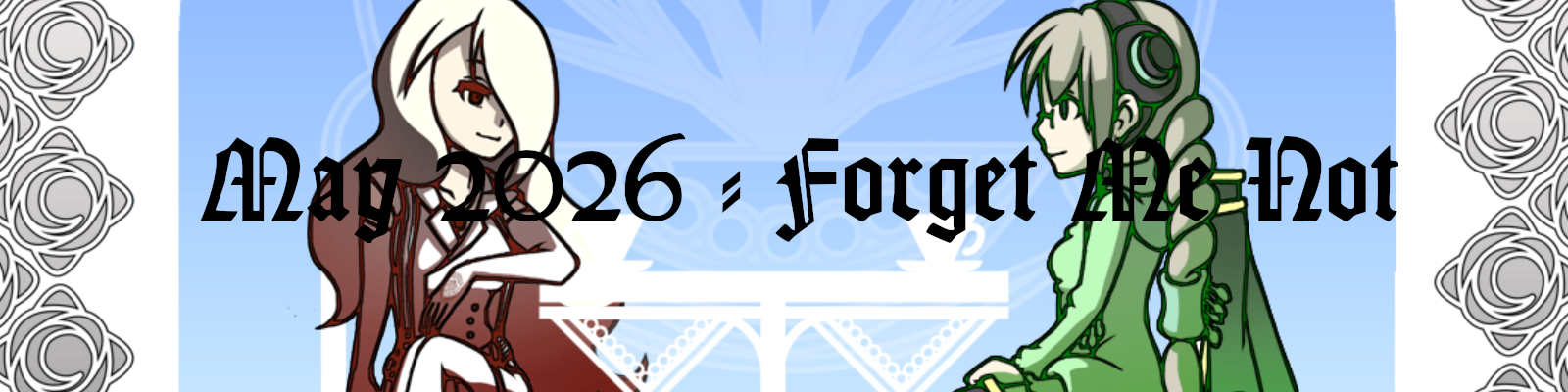
Our next issue, releasing over the few weeks, will be on the satrical clicker Forget Me Not: My Organic Garden from developer CAVYHOUSE.
Afterwards, we'll be tackling our next theme issue…

This will be a BIG issue, featuring writing from contributors new and old including Ludzu, who wrote this fantastic piece about collage in Heisei Pistol Show for us, and new-to-TIER critic Leanne Rahel (for a sampling, check out this wonderful piece about "girl code" in Silent Hill f for Bulletpoints). So excited to contribute some critical writing about this under-discussed genre (at least, in English). Some of the games included are Jack Jeanne, Club Suicide, Collar X Malice, and more.
We'll also use this as a little space to blog about things we've been up to, first draft, loose thoughts kind of writing.
Playing
Grace: Marathon, Marathon, Marathon. I've logged just over 150 hours and I'm still well behind many of my friends. I've dreamed about Marathon. I think about it when I'm working. I wonder if I can get one more round in before bedtime. I'm wary of this kind of obsession being treated as only a compliment. Yet, Marathon eats my brain not only because it is a modern video game, with some degree of gambling and lights which make my brain burr, but because it is so directly experiential and narrative, on a level that is even better with friends.
I found the discourse that Marathon was too mean baffling for a few reasons. One of which is the plain fact that most people are playing it with friends. The core formation of the game is a trio which helps each other out. Most of my games have been with either less experienced or more experienced players. I'm happy to help and have received that help from other players in turn. The moments when that aid crosses borders from automatic friends to potential foes is all the more magical because it has real stakes. Real world relationships are involve vulnerability and the potential for harm. Is it so bad that Marathon creates a similar space?
Phoenix: Paranormasight: The Seven Mysteries of Honjo, Animal Crossing: New Horizons (yes, the update reeled me back in like a sucker), and Hades II (god-moding my way through this one, because the plot and characterization fell flat in this for me, but if I need a mindless grind…). I'm looking forward to playing Wax Heads (which was worked on by Malindy Hetfield and Murray Somerwolff, the latter of which worked on Welcome to Elk!) and finishing up with another title which I cannot disclose at present. Then of course I've recently played Forget-Me-Not: My Organic Garden, which had a maddeningly abrupt ending but a pitch-perfect creepy-cute tone. The writing for Forget-Me-Not often reminded me of a mix of Kunihiko Ikuhara's work on Mawaru Penguindrum and Gen Urobuchi's work for Puella Magi Madoka Magica.
Of everything mentioned above, I'm surprised at how invested I am in Paranormasight. The game chafes a bit against the visual novel format, since its creators want both the pacing of a supernatural thriller and the contemplativeness of a slice-of-life drama. The prologue sequence before they reveal the story chart to the player nearly lost me due to how exposition-heavy it was. But the politics of its camera work and how it manipulates the player's sense of paranoia kept me interested (think of how Ju-On plays with the gaze and the under-the-covers jump scare scene). The MVPs for me of the cast are Mio Kurosuzu (gimme that announcement for the localized tie-in manga sequel featuring her, please), Richter Kai, Harue Shigima, and Tetsuo Tsutsumi.
Reading
Grace: I ended up working through some of my feelings on Pierre Guyotat's Idiocy memoir in my contribution to Bulletpoints issue on Marathon, but it's a slim volume of dizzying density. It also strikes the balance that I think, perhaps, every good memoir must strike in that it is both dead serious and shockingly funny. Guyotat's distance from himself allows him to name his own action idiocy, yet that distance is never ironic. Instead it is so intimate, both loving and damning, that it hums. Idiocy's sentences are endless, its repetitions multiple, but Peter Behrman De Sinéty's translation has steady rhythm and sprawling word choice. Many emotions about this one, but the most prominent is simple awe.
Phoenix: I've been scattershot with my reading habits lately. But in spite of this I've been gravitating towards a variety of poetry, essay collections, and comics. I read novel in verse Punching the Air by Ibi Zoboi and Yusef Salaam of the Exonerated Five and loved the complex way it explored juvie prison and abolition without falling into #OwnVoices pitfalls of educating white readers. In some ways, it was more about gentrification and how it erases cultural histories of neighborhoods than it was about a Black teen being wrongly convicted, though it was definitely the core of the novel. I finally found a moment to read Solnit's Men Explain Things to Me as well, and unfortunately, it's still mostly relevant. The most dated part of the collection was the realization that trans women aren't mentioned except in terms of speaking of how all of the LGBTQIA2S+ community is impacted generally by misogyny. Monstress is finally looking like it's going to be wrapping up for good and honestly, I really think it should this time. The themes of war and trauma have definitely been fully explored and the team is risking the series becoming a flagellation. But I'm sticking with it to the end, so perhaps I'm the one flagellating.
Watching
Grace: Have been slowly but steadily working through Star Trek: The Next Generation. Very, very easy to feel like this is what TV should be. Stand alone episodes with the occasional BIG ARC, which gives enough room to let characters move and change, while offering the comfort of regularity. The bone deep joy of watching competent, good people work through serious problems and nearly always succeed. It has certainly made me tired of the eight episode season, with their movie length arcs stretched into quadruple the length and noxious cliffhangers.
Perhaps what I am saying is that even pop art deserves the space to be bad, not the droning, second-screen bad of a Netflix show, but a captivating, earnest badness. Even well into season five, The Next Generation is sometimes astoundingly bad. But that badness indicates a creative space, which also allows for its strangest and most resonant ideas to succeed. That possibility space feels narrower and narrower now. What a shame.
Phoenix: I've been catching up on film classics that I kept telling friends and family I will watch at their recommendation. Most recently I watched Kiyoshi Kurosawa's Pulse and was surprised it ended on a more hopeful note than expected, especially having watched Cure beforehand. I also caught up on THX 1138 (damn, that was a student film???) and Ghost Dog: The Way of the Samurai. What all these films have imparted to me is that we used to be okay with letting audiences hang. There was a respectfulness to it that was devoid of pretension at once. Speculation was welcomed by each of these films, like whether Cure and Pulse were apocalyptic or whether THX 1138 and Ghost Dog were tragic. Despite all these films being heavy subtextually, there were small gleams of hope in each. Legacies can be traumatizing but not set in stone. Reinterpretation of doctrines can be transformative, for better and for worse.
I'm not keen on short form content lately, but I am starting to watch the Pet Shop of Horrors miniseries (real throwback, I know). I was always morbidly curious yet terrified of engaging with the anime or manga in high school. Teen me would be shocked at how much horror present me has consumed (which is still not nearly as much as a typical horror buff). I'm fascinated by how stereotypical the Chinatown framing of the shop and its owner are. Yet Count D is rather complex and resists typing in some ways. I find myself rooting for him more than the detective, who is rendered (as of the first episode at least) as a simplistic loud American archetype. This is probably by design, but it's working for me and I'm curious to see what other cultural narratives it deconstructs via the cautionary tale format.