

A Corpse Opens Its Mouth
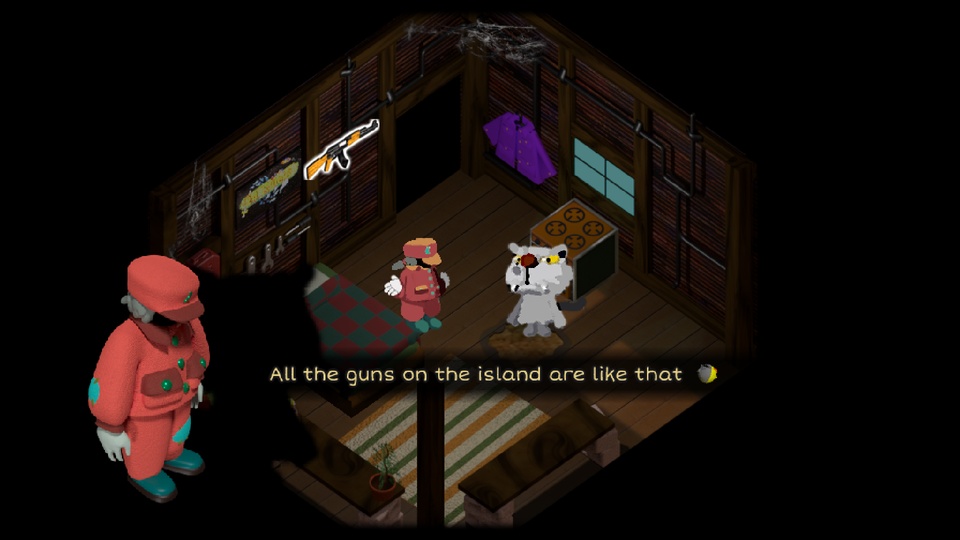
Home, an alien ghost hand, pilots Mawsynram, the corpse of a soldier. Mawsynram died, not in combat, but because he drank bad water, the kind of military malfeasance which must haunt bases regardless of country or location. In a broad way, 24 Killers is a cozy game. It has a day/night cycle, a means of limiting the activities you can do every single day, a village of cute companions which whom you build relationships. Yet, it is all in the ruins of contested territory and failed military action. We are all specks in the void. Sometimes the void is a falling bomb.
This is not exactly new ground for life sims, but it feels increasingly uncommon. The first Rune Factory game takes place in a border town on the edge of an empire. The plot concerns that empire's gradual encroachment on that town's quiet rural life. The pastoral idyll of the village is a deliberate contrast to that outside war. The community is both tightly knit and diverse. The farm is not an inheritance, but the gift of a stranger. Each of the game's tools are given to the player. Yet the village has some harshness. One of the children was rescued from a battlefield. A young girl suffers from a mysterious illness. Yet, the racial and political tensions which define the world outside are suspended here, even while the world encroaches on the town more with every passing day.
This is something of a contrast to the recent bout of life sims, personified by Stardew Valley. In fairness, the titular town in that game is depicted as an escape from office work. The game's main plot, so far as there is one, concerns the rebuilding of a community center. After the center is completed, the town's lone megastore shuts down. One imagines a mustached business man shaking his fist at those plucky small-business owners. The game's treatment of these questions is broad and feel-good. Hallmark movie rather than pastoral epic. This is underlined by the game's focus on making the player's farm ever more efficient. The opening cutscene of Stardew Valley positions the farm as an escape from the capitalist grind, but in the game itself you'll watch itemized spreadsheets scroll across the screen and optimize product workflows anyway.
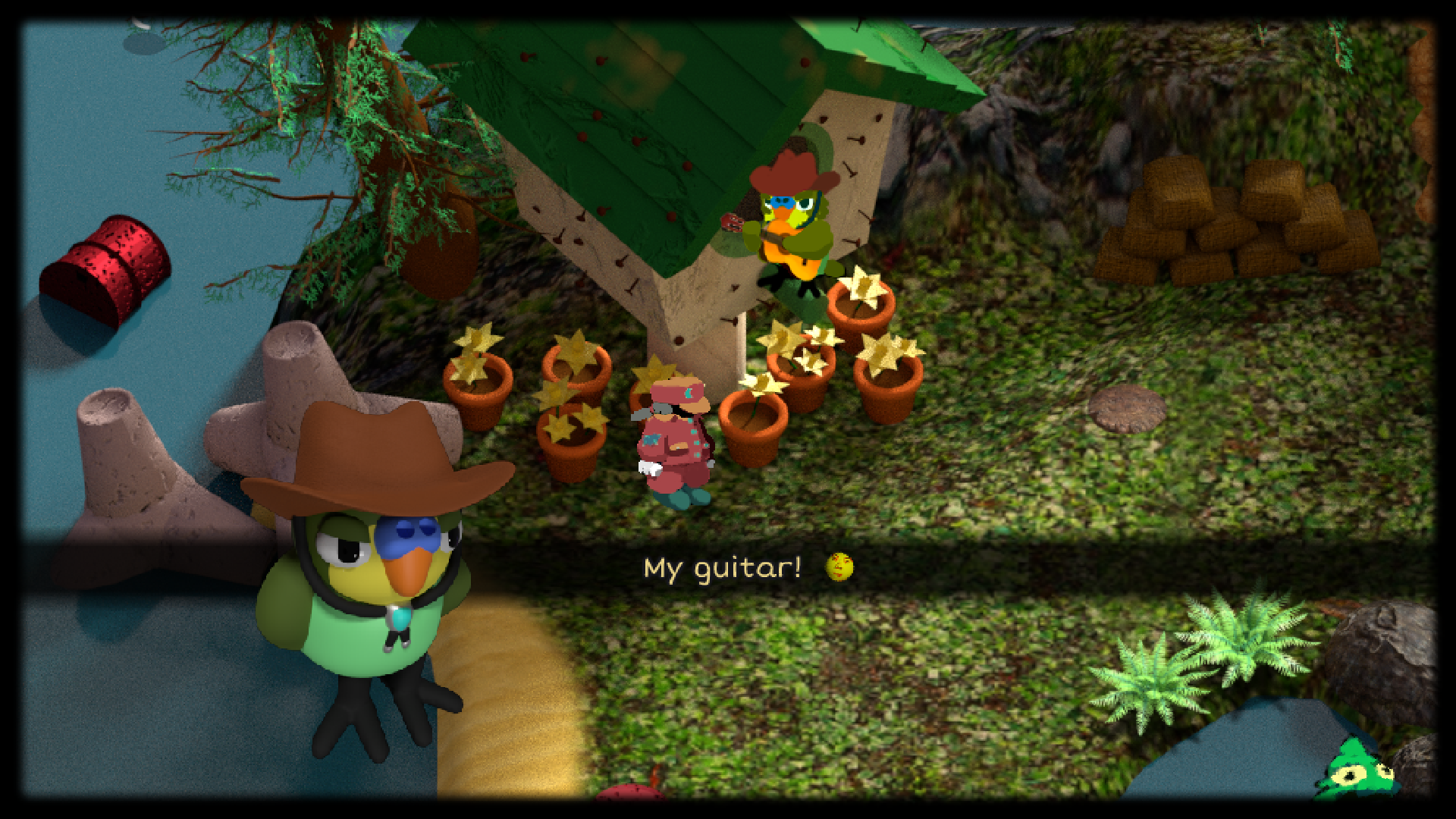
24 Killers is more immediately in conversation with UFO: A Day in the Life and other games in the lineage of Love-de-Lic than Harvest Moon and its ilk. Yet, it understands something about the appeal of slice-of-life that many games of this era do not. Namely, life is hard. Ghibli is a perennial citation for these games. Kiki's Delivery Service is practically ground zero for the cozy wave, from its idealized Europe, parade of kind-hearted neighbors and businesspeople, and its whimsical albeit supernatural touch. Yet, Ghibli's films have a tangible sense of loss. Kiki concerns both the existential dread of youth, being young and not knowing who you are, and the bind of a passionate artist caught, for the very first time, in a block. Even My Neighbor Totoro, a warm, pastoral coming-of-age film filled with hijinks, revolves around a sick, absent mother and the fear that she could die at anytime. This, for the record, is why it is a great double feature with Grave of the Fireflies instead of a baffling companion. These films' power come from their awareness of the flowers sprouting from earth and the dead things which allow that flower to thrive.
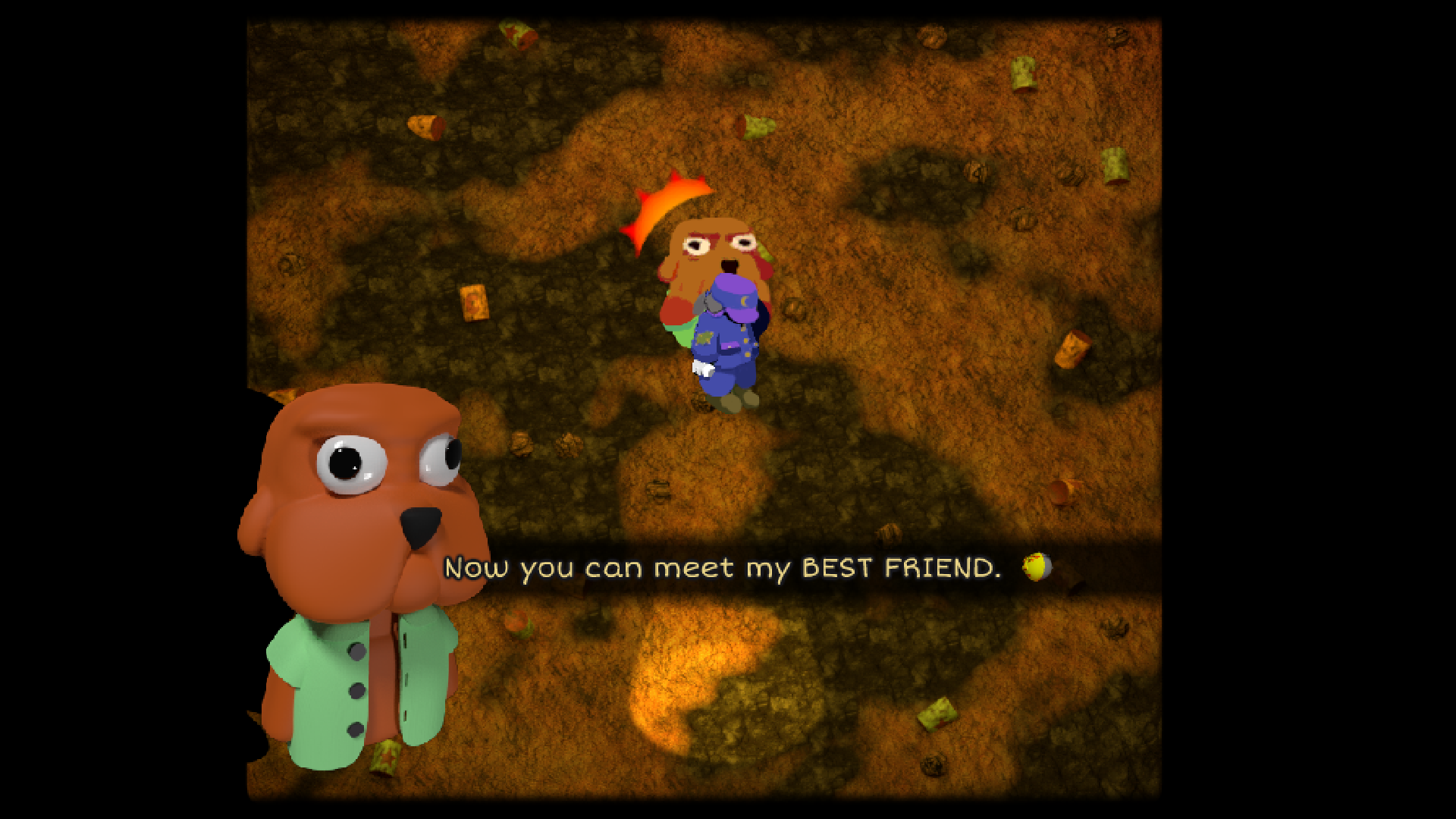
Refreshingly, Ghibli feels distant for 24 Killers. Its whimsy is dioramic and ceramic, rather than painterly. Its supernaturalisms are broad and cosmic, rather than narrow and Romantic. Yet, it is also grounded in this truth: Every town, no matter how kind and cozy, must have a graveyard. Several of the Mons, which Home helps and incorporates, are ghosts. He helps them, not through restoration, but through acceptance. He drives them around the island and eventually, takes them to their burial place. While he remains in the town, Home is the lone marker of their existence. He can take their forms. He is a kind of grave. But that fact is not somber or sinister. It is natural and wanted.
These moments have a real, at-home friction. For one, Home is acting selfishly. He is cursed and wants to go, well, where he came from. The only way out is the regular rhythm of life sims. Home is not exactly kind-hearted. Even as he grows fond of the island and the Mons, he belittles and makes fun of them. His name is an irony, for the island is no home to him. The Mons can also be petty and distrustful. Yet, as they work through their shared cause, they grow into a kind of harmony. They have to earn trust altogether.
There is one moment where something like real war comes to the island. Through an error of bureaucracy, the army has continued dropping supplies onto the ruins of its outpost. The game treats this as a funny event more than as a threat. The destruction of the military base does not impede Home's quest. It does not endanger any of the isle's inhabitants. Yet, if the army had realized their error just a few days earlier, someone could have been hurt. The bombing underlines the shadow of violence which oversees the game entirely. The island in 24 Killers exists through luck and fate, both good and bad. Whispers, the spirits which Home uses as currency, created the Mons through their mischief. On "blood moons", more of them appear. The island's history as a military base, crash site, and contested territory lead to its particular formation. This place is a seed. With water and time, it could grow.
Ultimately, 24 Killers' scale is not mundane at all. Every one of the 24 Killers' save files is a universe unto itself. Yet they share commonalities. Reaching a specific point in each save file will unlock new abilities in the next. The postgame of 24 Killers is a cascading journey of increasing ease, buoyed by past events. History is not only cruel, but the ways it is kind are sort of beyond human reckoning. Each seed, each world, still exists in the context of military action. The cafés and homes of the island will always be inside the leftover infrastructure of war. Whatever paradises are to come will exist in the shadow of now. Before the night, there is the day. And after the day, the night. The whimsy of 24 Killers has such melancholy bite, because it never lets go of that cycle.